Features
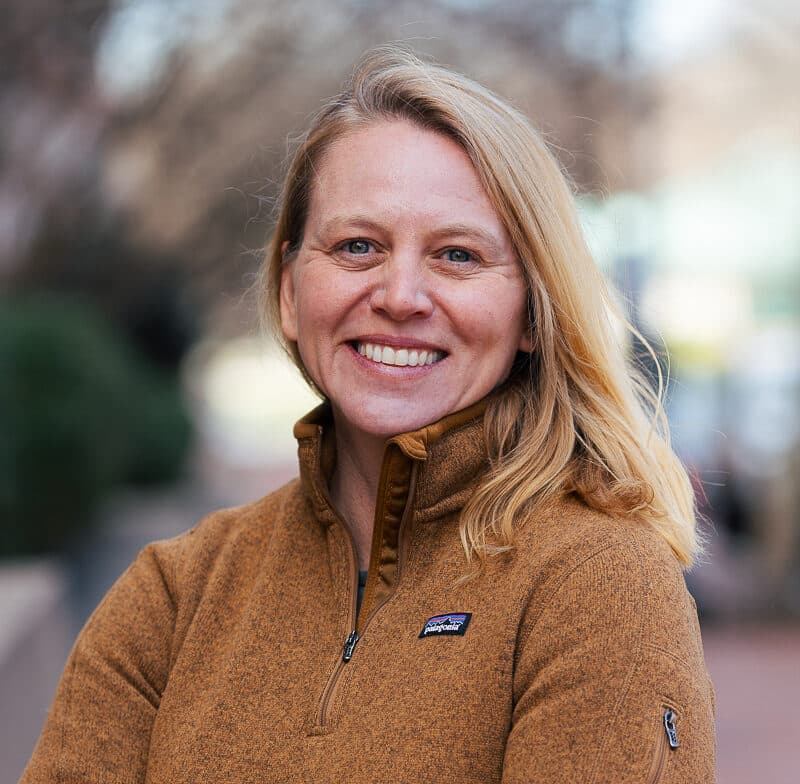
Get to know Vanessa Dick, our Senior Governance Lead
- Governance
Vanessa Dick is the Senior Governance Lead for WWF Global Arctic Programme, where she oversees the development, implementation, and monitoring of strategies for effective Arctic governance. She’s working hard to ensure that Arctic decision-making prioritizes nature and includes the voices of Indigenous Peoples and Arctic communities.
What do we actually mean by governance in the Arctic? How can governance make a difference for the Arctic?
Governance is who decides, and by what rules. Good governance is transparent, inclusive, and accountable. Poor governance is opaque, narrow, and corrupt.
In the Arctic, good governance means predictable, inclusive decision-making that is determined by, and accountable to, those most affected. That starts with Indigenous Peoples who have called the Arctic home for generations. Their knowledge, rights, and voices aren’t a courtesy to be included. They’re essential.
But good governance alone won’t be enough. We also need bold policy that prioritizes healthy, functioning ecosystems.
The Arctic is both a warning and a window. The first place to show the strain of a warming planet and accelerating biodiversity loss, and a glimpse of what’s possible if we get this right. It deserves a governance system, and a policy vision, worthy of what’s at stake.
What drives you in your work?
My mother is a historian. My childhood was filled with stories about remarkable people who achieved transformative things for social justice and the environment, often when the outcome seemed impossible.
What stayed with me wasn’t just their bravery or tenacity. It was something less celebrated: the ability to stay focused when the work feels slow, incremental, even mundane. Real change rarely looks heroic in the moment.
That’s what drives me. The belief that showing up consistently, for the hard conversations, the unglamorous processes, the governance work that happens long before policy gets made, is exactly how impossible outcomes become possible ones.
What role does WWF play in the future of the Arctic?
WWF brings world-class science and sophisticated analysis on economics, conservation management, and policy. But that’s the obvious part.
More importantly, WWF along with the broader environmental community and its supporters asks decision-makers to hold a bigger vision. A future that broadly defines human security as inclusive of clean air, water, and land. Where biodiversity is not a casualty of short-term thinking, but a measure of our success.
WWF’s Global Arctic Programme brings that vision into the rooms where Arctic decisions actually get made — the Arctic Council, IMO, CAOFA, OSPAR, BBNJ, and others — a fragmented governance landscape that shapes the Arctic’s future whether we’re paying attention or not.
If someone wants to network with you, what conversation starter should they use?
We live in a transactional world, and networking can feel like its worst expression. My advice is to shed that construct entirely. Show up curious. Seek to learn something rather than gain something.
So, if you want to start a conversation with me, tell me the last thing that surprised you. I’m genuinely interested.
Curiosity is the best networking.
By WWF Global Arctic Programme