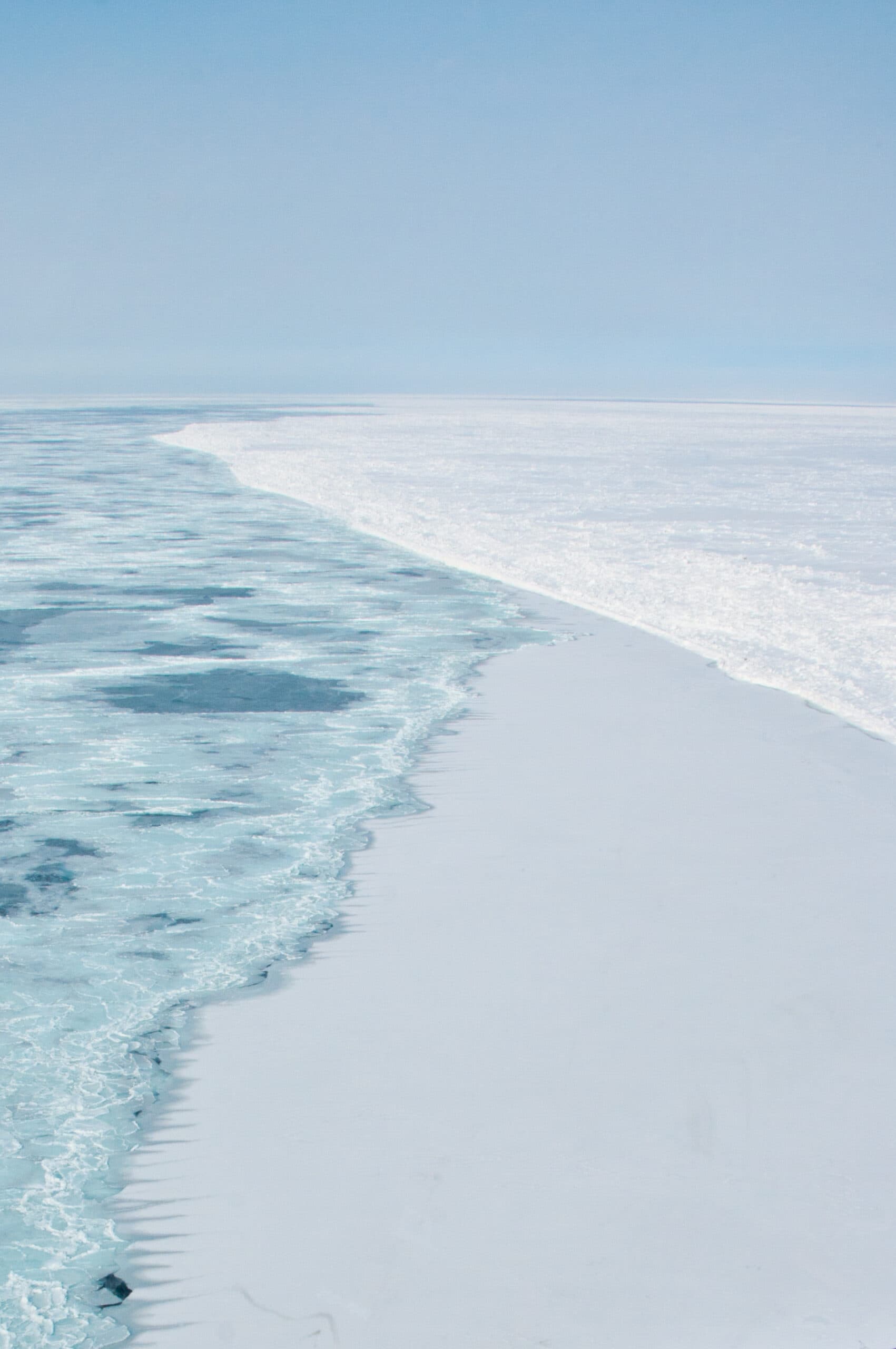
Three types of Arctic sea ice converging. © WWF-US/Elisabeth Kruger
Features
How the High Seas Treaty could protect the Central Arctic Ocean
- Governance
In a world where sea ice is quickly becoming a scarcity, the Central Arctic Ocean is vital for supporting ice-dependent Arctic life. As the Biodiversity Beyond National Jurisdiction (BBNJ) Agreement, also known as the High Seas Treaty, enters into force on 17 January, 2026, it could help safeguard the last strongholds of arctic sea ice.
What is the Central Arctic Ocean?
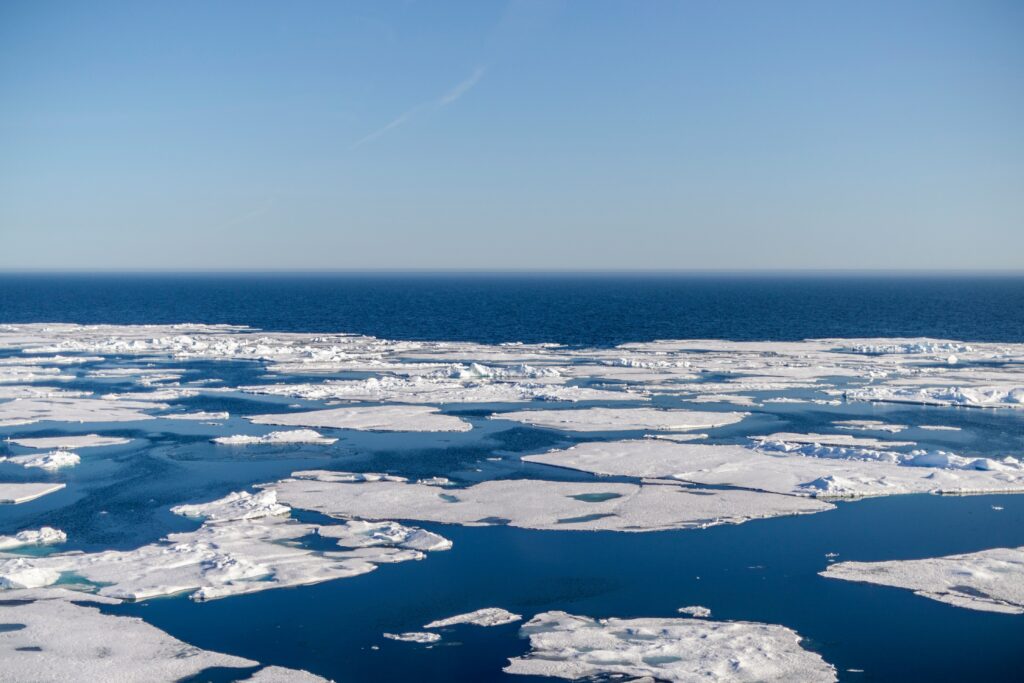
The Central Arctic Ocean sits at the heart of the Arctic. Surrounding the North Pole, it is the northernmost large marine ecosystem on the planet. With its 3.3 million square kilometres, it’s roughly the size of India. For most of human history, it has been permanently covered by ice and snow. This provides important and globally unique habitats, species and ecosystems that are dependent on the ice and cold.
© Hector John Periquin on Unsplash
An ocean of ice and snow: what makes the Central Arctic Ocean so unique
It is the Central Arctic Ocean’s enduring ice cover that makes it truly unique. It’s the only ocean with a year-round sea ice cover. Ocean currents, ice drift, and the movement of organisms connect the Central Arctic Ocean to arctic coastal ecosystems and communities, circulating nutrients, freshwater, and sea ice across vast distances. In doing so, the Central Arctic Ocean plays a critical role in sustaining the Last Ice Area, the region north of Canada and Greenland expected to retain summer sea ice longer than anywhere else in the Arctic as the climate warms. Winter ice formation within the ocean, combined with arctic circulation patterns, helps maintain what may become the Arctic’s final refuge for ice-dependent life.
Sea ice supports life in the Arctic
Sea ice is much more than just frozen water. It’s a living platform that supports entire ecosystems. Polar bears, walruses, and certain seal species rely on sea ice to feed, raise their young, and rest. Beneath the ice, algae grow on its underside. This forms the foundation of arctic marine food webs, which support fish, seabirds, and marine mammals. For arctic Indigenous Peoples, the sea ice is a platform for subsistence hunting, cultural practices, and travel. It connects communities.
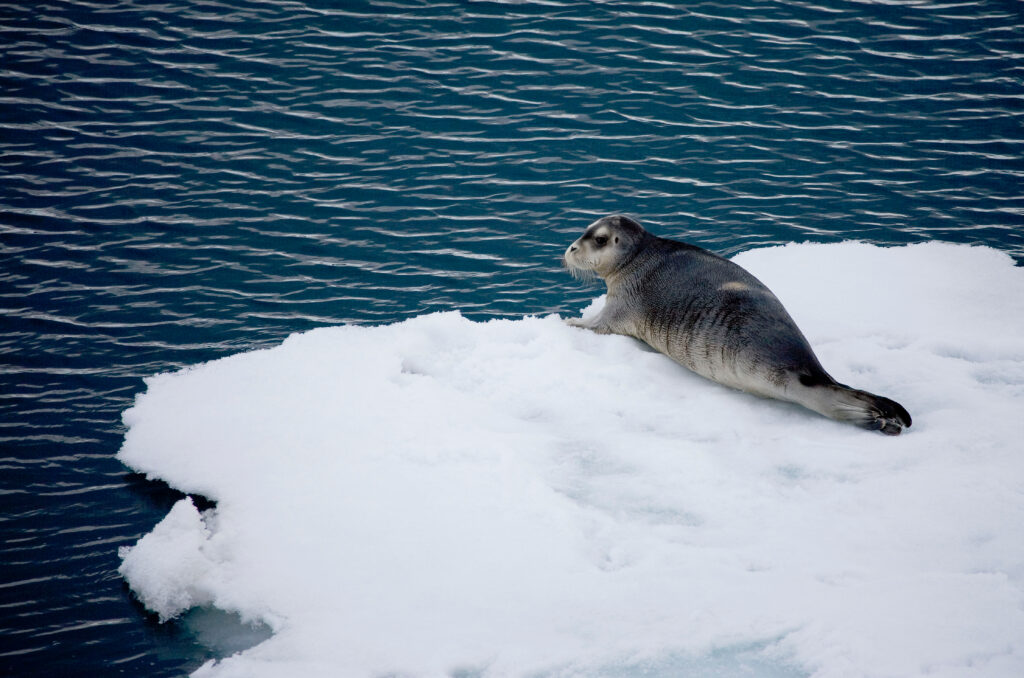
Long bearded seal on drifting ice. © WWF / Sindre Kinnerød
Interest in the Central Arctic Ocean is growing
The extreme environment and ice covering the Central Arctic Ocean have made it largely inaccessible to industrial activity.
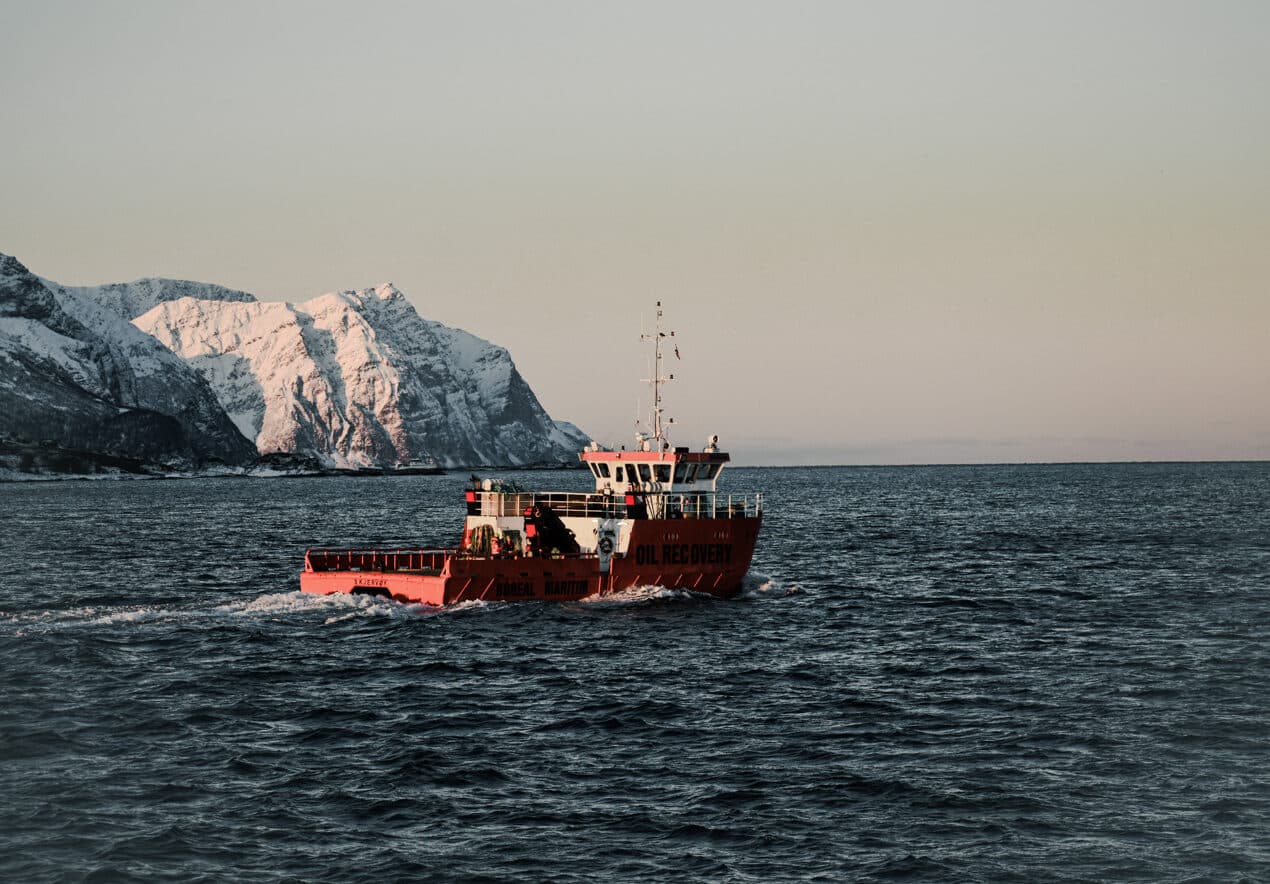
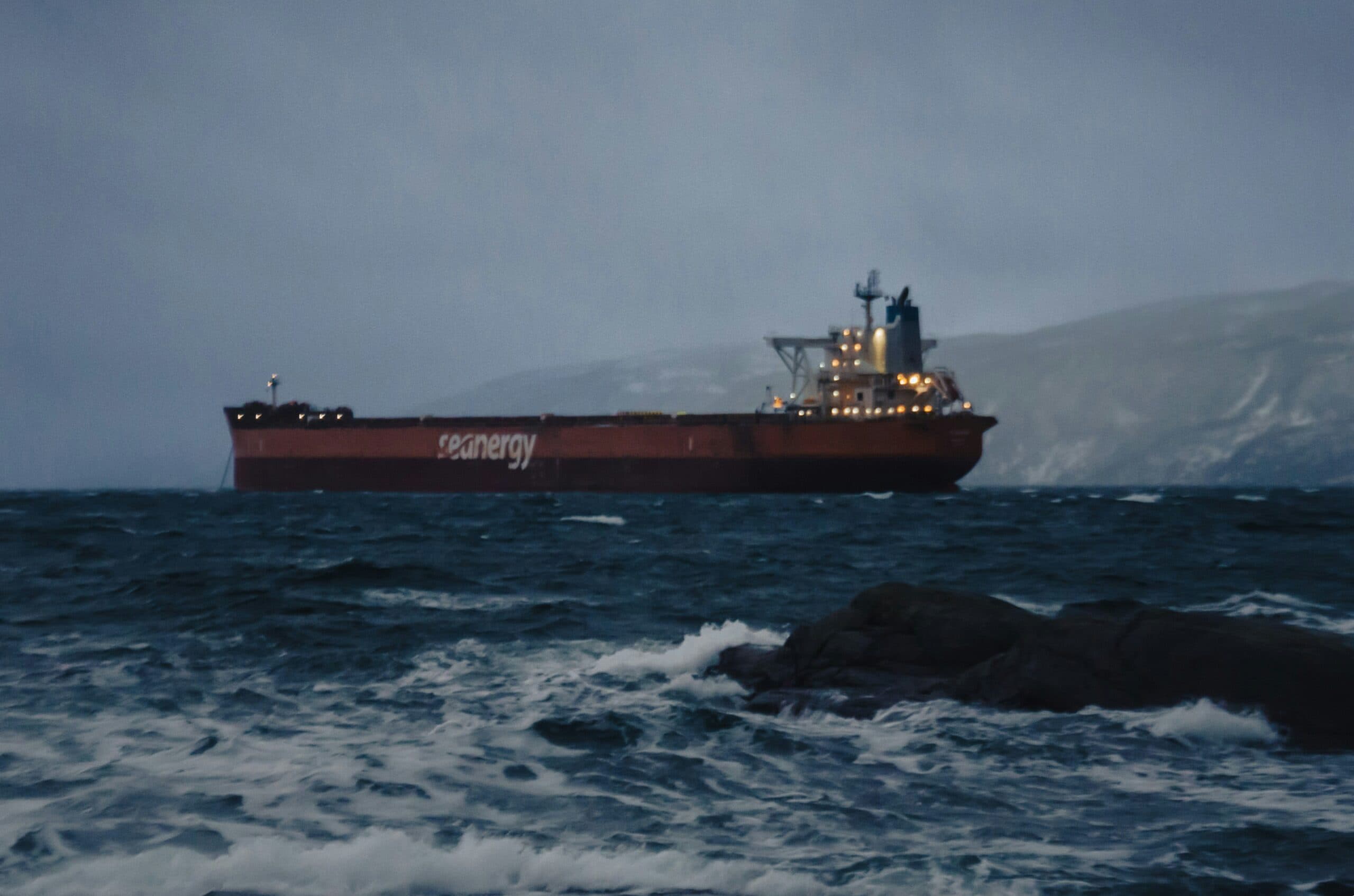
However, as the ice that has covered the Central Arctic Ocean increasingly retreats, it becomes more accessible for industrial activity. Industry actors are looking to the Arctic for new opportunities as new shipping routes become feasible, interest increases in previously unexplored oil, gas, and mineral resources, and attention is turning to the potential for future fishing. These industrial activities bring noise, pollution, and combined ecological pressure to an ecosystem that evolved under extreme stability. The challenge is not only the activities themselves, but that access is increasing faster than governance systems can respond.
What are the high seas and why do they need protection?
Along a country’s coastline, that country has broad authority to decide what activities are allowed and how to manage them. This applies to everything from fishing and shipping to oil and gas development. Farther offshore, as we go beyond national jurisdictions and into the high seas, those rules no longer apply. Much of the Central Arctic Ocean is in the high seas.
The governance of the high seas portion of the Central Arctic Ocean has defaulted to a fragmented, sector-by-sector approach rather than a unified plan for protecting the ocean. This means that no one is responsible for thinking about the ecosystem of the ocean as a whole, or what the total combined impact of activities such as shipping, mining, oil and gas drilling, tourism, and fishing has on the ocean’s ecosystems. The responsibilities are instead divided among several actors who work largely independently. For example:
- Shipping is regulated by the International Maritime Organization.
- Seabed minerals fall under the International Seabed Authority.
- Commercial fishing is addressed through the Central Arctic Ocean Fisheries Agreement (CAOFA). This agreement currently prohibits fishing in the CAO. Commercial fishing is also regulated under the North-East Atlantic Fisheries Commission (NEAFC).
- The Arctic Council provides a key forum for scientific cooperation, knowledge-sharing, and policy coordination among Arctic states and Indigenous Peoples.
- Regional agreements such as OSPAR play an important role in marine protection in parts of the North Atlantic connected to the Arctic system.
This shows how complex it is to protect the Central Arctic Ocean and other high seas, which is why the High Seas Treaty is so important. Our Governance Map illustrates the current patchwork and highlights where the treaty can bring coherence.
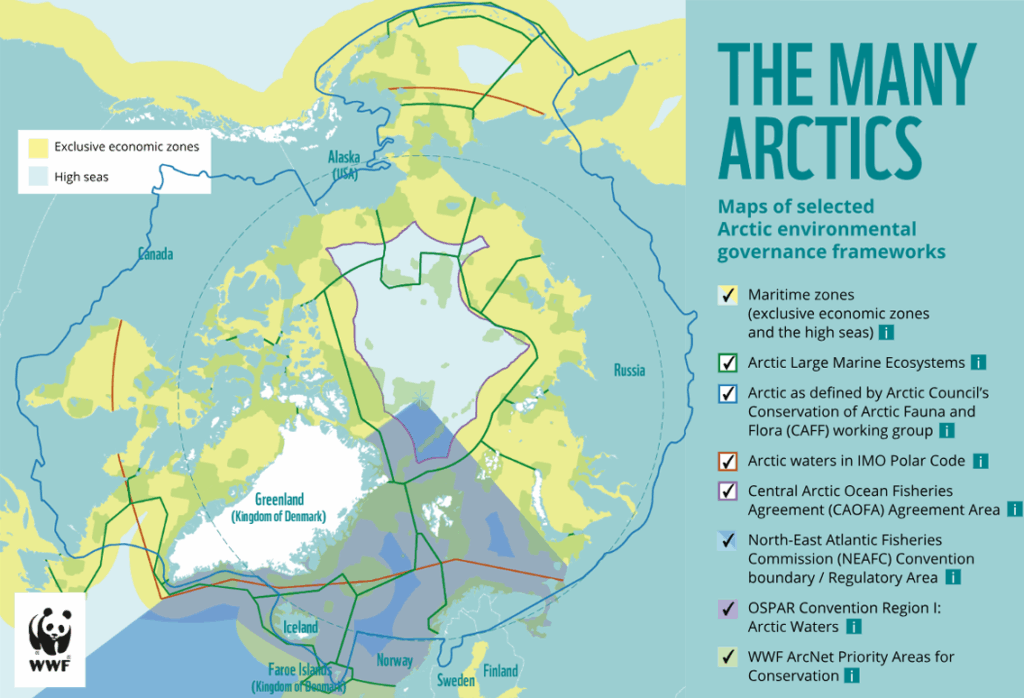
Example of all the overlapping systems governing the Arctic, illustrating the complexity.
How the BBNJ Agreement could make a difference in the Arctic
The High Seas Treaty could be a tool for protecting places like the Central Arctic Ocean. Once it comes into force, it will be possible to create marine protected areas in international waters. It will also require environmental impact assessments for new activities. The treaty also encourages actors to work together on science and sharing benefits more fairly.
For the Central Arctic Ocean, the High Seas Treaty offers a way to bring order to a complex and fragmented system of rules. It’s a unique opportunity to protect this largely undisturbed ocean before large-scale industrial activities take hold. Importantly, it also requires cooperation with existing regional and sector-based organisations. This creates opportunities to strengthen conservation by working together, rather than repeating the same efforts.
As the Arctic continues to warm and the Central Arctic Ocean becomes easier to access, the question is no longer whether change is coming, but whether governance can keep pace. The High Seas Treaty provides a rare chance to act early. It could help us protect an ecosystem of global importance and safeguard the last strongholds of Arctic sea ice before they are lost.
Frequently asked questions about the High Seas Treaty and the Arctic
When does the High Seas Treaty enter into force?
The High Seas Treaty (BBNJ Agreement) enters into force on 17 January, 2026.
How many countries have ratified the High Seas Treaty?
As of January 2025, over 80 countries have ratified the BBNJ Agreement. 60 ratifications were needed for the treaty to enter into force, and this was achieved on 19 September, 2025.
What is WWF doing to protect the Central Arctic Ocean?
From the start, WWF has played an active role in supporting the development of the High Seas Treaty. We will stay involved as the rules are negotiated for how the Treaty will work in practice. WWF actively participates in Arctic governance forums relevant to the Central Arctic Ocean, advocating for safeguards that will protect nature in this precious corner of the planet while there’s still time. Our efforts to protect Arctic ecosystems proactively can help ensure that the treaty will work effectively in the region. Discover WWF Global Arctic Programme’s work on governance in the Arctic.
By WWF Global Arctic Programme