
Photo credit: Colin Ruthven via unsplash.com
Editorial
A choir of voices to protect a mosaic of places


How can we protect the Arctic Ocean? I have been asked this question many times over my almost two decades with WWF’s Global Arctic Programme.
People are sometimes surprised when I start my answer by taking a bird’s-eye view from high over the North Pole. From here, we see the entire Arctic Ocean, covered by seasonally expanding and contracting sea ice, with a deep basin surrounded by shallow seas and extensive coastlines dotted with towns and communities. From this perspective, the ocean’s ecological dimensions and connections are visible—connections, for example, between the algal, invertebrate and fish communities of the sea ice marginal zone, where open water and ice intertwine across vast areas, and the marine mammal populations that track the zone’s position through the seasons.
It is these connections across a mosaic of places and within each of these places that need conserving and protecting: the Arctic web of life and the stage upon which it is set.
Connections, also, between coastal breeding colonies of Arctic seabirds and places far offshore that provide habitat for the juvenile fish they feed on. And last but not least, connections between the Arctic and oceans to the south for the many seasonal visitors that feed on the riches of the Arctic, such as populations of large whales and fish. It is these connections across a mosaic of places and within each of these places that need conserving and protecting: the Arctic web of life and the stage upon which it is set.
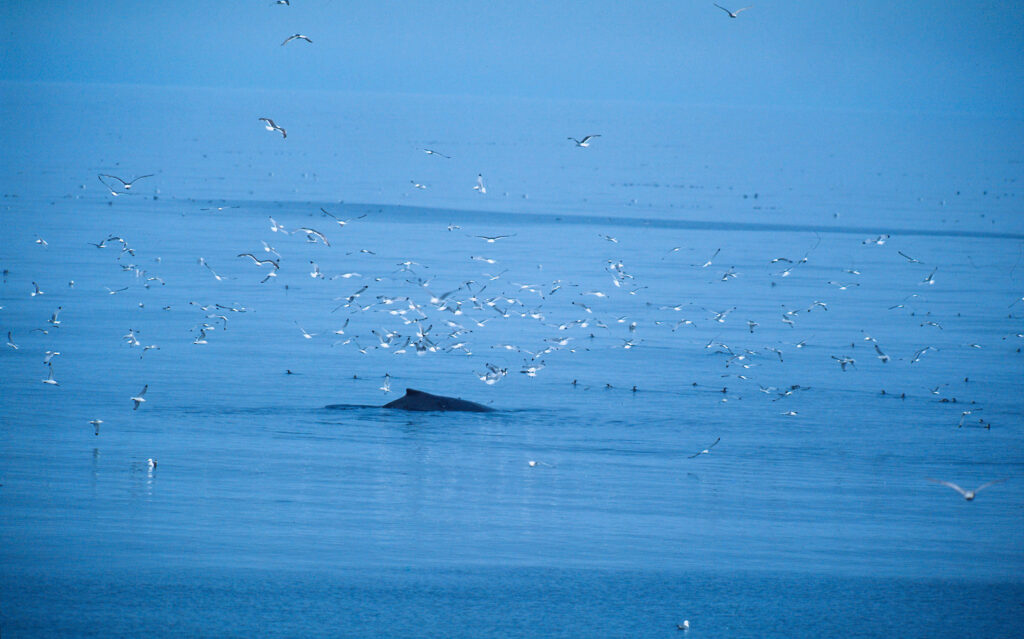
Humpback whale with seabirds feeding in the Bering Sea. © Kevin Schafer / WWF
Establishing a comprehensive ocean-spanning network of marine protected and conserved areas takes this perspective into account and gives Arctic biodiversity a fighting chance to withstand mounting pressures from climate change and sweeping industrial activity. A piecemeal approach to conservation that neglects ecological connections and dimensions will not succeed. ArcNet, an ocean-spanning conservation planning analysis organized by WWF, provides a blueprint for establishing such a network. With its 83 identified priority areas for conservation, it maps out the mosaic of places where we must establish conservation measures to support and safeguard Arctic marine life.
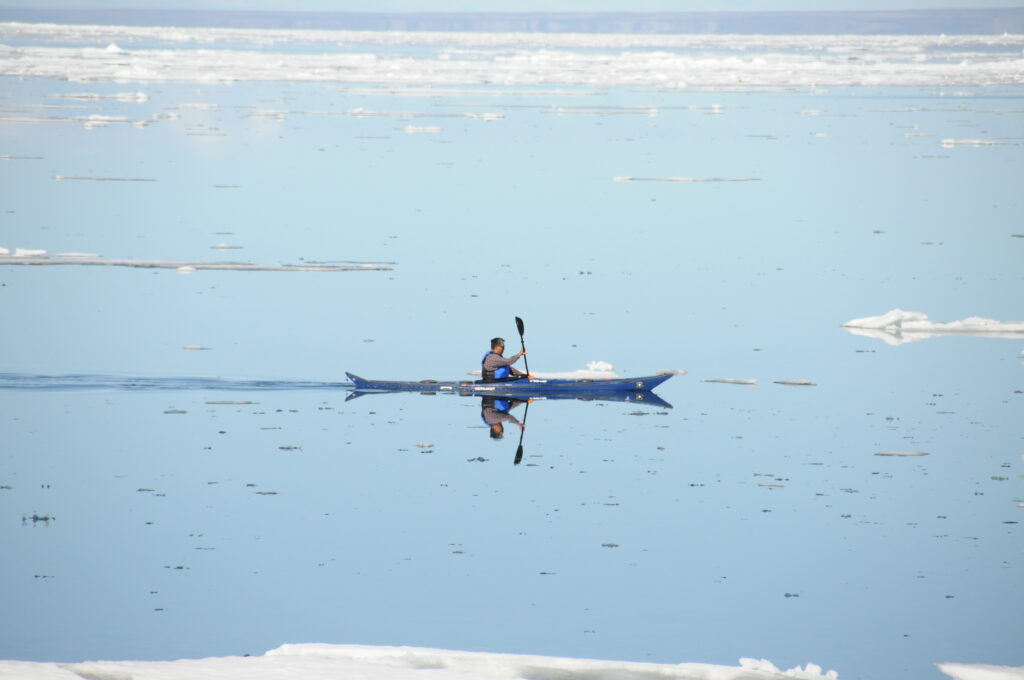
Each of these places is unique and has its own voice and song. People are part of this voice—whether because they are part of the ecological connections and call these places home or because they can offer perspectives grounded in knowledge, understanding and awe.
© Peter Ewins / WWF-Canada
I believe that connecting and elevating these voices—such that they become a choir, so to speak—is an essential yet underutilized pathway to conservation success. Bringing together accounts of the wonder and significance of places through the diverse lenses of people’s relationships, values, needs, experiences and knowledges will make the mosaic of places that compose the Arctic web of life shine. Bringing the people together—by matching and connecting the network of places with a network of people—will create the momentum and cooperation needed to establish an ocean-spanning network of places that can collectively conserve the biological diversity and ecological connections of Arctic marine life.
Maybe this sounds like too soft an approach? Indeed, it cannot be the only approach. By committing to the United Nations Kunming–Montreal Global Biodiversity Framework, almost all Arctic governments agreed to protect 30 per cent of the ocean by 2030. However, progress has been slow and fragmented: no Arctic government is taking the bird’s-eye view that would protect the Arctic web of life. The framework itself recognizes that achieving its targets relies on action and cooperation by all levels of government and all of society. As long as there is no choir of voices promoting protection, other efforts won’t be sufficient. A network of people and places could become such a champion.
The cooperation that would arise from weaving a network of people to establish and manage an ocean-spanning network of Arctic marine protected and conserved areas may just be what the region needs in these turbulent and fragmented times. A resilient and sustainable Arctic is certainly not possible without both cooperation and conservation.


By Martin Sommerkorn
Head, Conservation, WWF Arctic Coordinating Team


