
Qaanaaq, Greenland. Photo credit: Saki Daorana
Thriving in Qaanaaq’s icy landscape
A way of life at risk in northern Greenland


Qaanaaq is the northernmost town in Greenland—and one of the northernmost in the world. The community of around 600 people is located at the northern entrance to the Inglefield Bredning (Fjord), approximately 1,350 kilometres from the North Pole. It’s a place where the sun doesn’t rise for four months of the year—or set for another four. Massive icebergs dwarf the colourful houses along its shore, and every summer, large pods of narwhals arrive.
Originally from Japan, SAKI DAORANA has called this small, isolated settlement home for 27 years. Her partner, Panigpak Daorana, is a hunter and life-long resident of Qaanaaq. Daorana spoke to The Circle about what makes the area so special—and why its biodiversity is so important to the community.
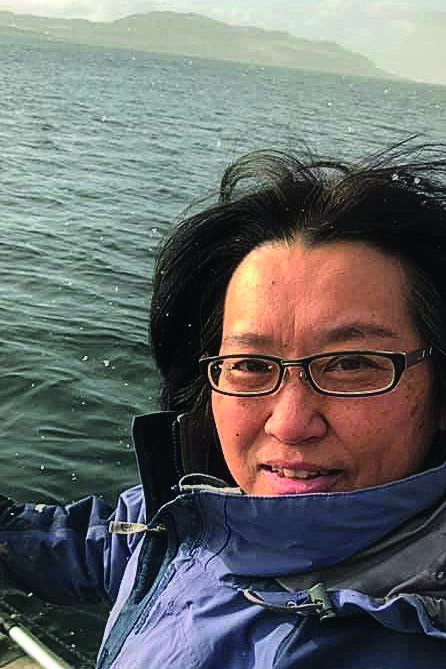
Saki Daorana. Photo credit: Saki Daorana
What drew you to Qaanaaq?
I was doing a 10-day kayaking trip near Ellesmere Island (Canada) and Qaanaaq in 1998. I was interested in the culture in Qaanaaq before the trip. But when I went, the people were just… wow! They know their culture and they’re proud of it. They still hunt narwhal in kayaks using harpoons. It is probably one of the only places on our planet where those skills are still used regularly. When I visited the first time, I was told they use kayaks for hunting because they are totally silent. That was my introduction to the culture.
The sea doesn’t freeze as long as it once did, and the ice is much thinner. The weather has really changed, especially during the last five years
—Saki Daorana, resident of Qaanaaq.
From a nature perspective, what makes the area so special?
The sea freezes for seven months of the year. It used to be nine months. There are big glaciers, there is the ice sheet, the narwhal. It’s all pretty spectacular. I like how the people here know how to navigate and thrive in this remote landscape. From a European or a North American lens, it seems so harsh, and you would assume there are many hardships. That is true. But no one here wants to live in Paris or anywhere else. No way.
What changes have you seen during the time you’ve called Qaanaaq home?
The sea doesn’t freeze as long as it once did, and the ice is much thinner. The weather has really changed, especially during the last five years. It used to be that from April to July, we wouldn’t see a single drop of rain. Just blue sky for 20 or 30 days in a row. It was so stable. But now there are storms all the time.
And the movements of the animals have changed. There used to be almost no polar bears, but now there are two or three a year in the fjord. The number of narwhals has been declining—or maybe they’ve changed their patterns, because we’re seeing different groups. The hunters tell us there are two: one group in the fjord and another further north. The number of northern narwhals we see around the area in spring has exploded in the last three years—but they’re getting thinner. Their blubber is not as thick. It’s very obvious. And the walrus? They’re not healthy. There has been talk among the locals that the walruses are starving and getting smaller.

In the Qaanaaq fjord, hunters still use kayaks and harpoons to catch narwhals. Photo credit: Saki Daorana
How are these changes affecting the community?
The Inuit here are people of the sea. Although there are populations of Inuit that spend more time on land, the season for hunting muskox and reindeer here is short—so the sea is definitely our “larder.” It’s our kitchen, our food cache. So the hardships are increasing.
But it’s not just the climate that affects the locals. It’s also the way hunting is more limited now by quotas. Hunting is the main occupation and is what brings pride and identity to the people and society. But a lot of legal or regulatory elements, like hunting quotas, have come in the last 20 years. Before that, the people just hunted in the traditional way, which is actually very sustainable.
Our community is different from southern Greenland in that a lot of traditional skills and values are still alive. But even this has been changing over the past seven to 10 years. What concerns me is that the traditional way of hunting with a kayak and harpoon is fading. People like to do new things, and some are focused on short-term income. Those kinds of people have started chasing narwhals in motorboats. This was unheard of when I first arrived—but it’s spreading fast. It’s really concerning.
What does this mean for the community?
Let me talk about what happened last year and this year. There’s a tiny settlement of 20 or 25 people at the bottom of the fjord, which is the narwhals’ calving and feeding area in summer. In spring, when the ice breaks up, the narwhals stream into the fjord. There’s a guy in the settlement who sits in his window with binoculars and watches them. Last year or the year before, he did not see a single one for a whole week after the ice broke up. This was very unusual and alarming. Our theory is that there are so many boats moving around at the mouth of the fjord that the narwhals couldn’t flow in immediately as they always did.
There are probably multiple reasons for this. But one hunter put it really well. He told me, “You know, we’ve lost our ‘we.’ Everything is ‘me.’ If I do this, how much am I going to earn? If you want me to do this, how is it going to benefit me?” That guy doesn’t care if the hunters at the bottom of the fjord get no narwhals. He’s not interested.
Not everybody is like this, but when one part of the community doesn’t care anymore, they can do a lot of harm to the others.
Why do you think it is important to protect this area and way of life?
This is the people’s identity. When that goes away, how are their kids and grandkids going to fare? The ones who are messing things up don’t care so much.
Science is good, but slow. You do the research, take it home and analyze it. You get data and reach a conclusion. I’m worried that we don’t have enough time for scientists to catch up. Nature is good at rebounding, but it doesn’t look so good right now.
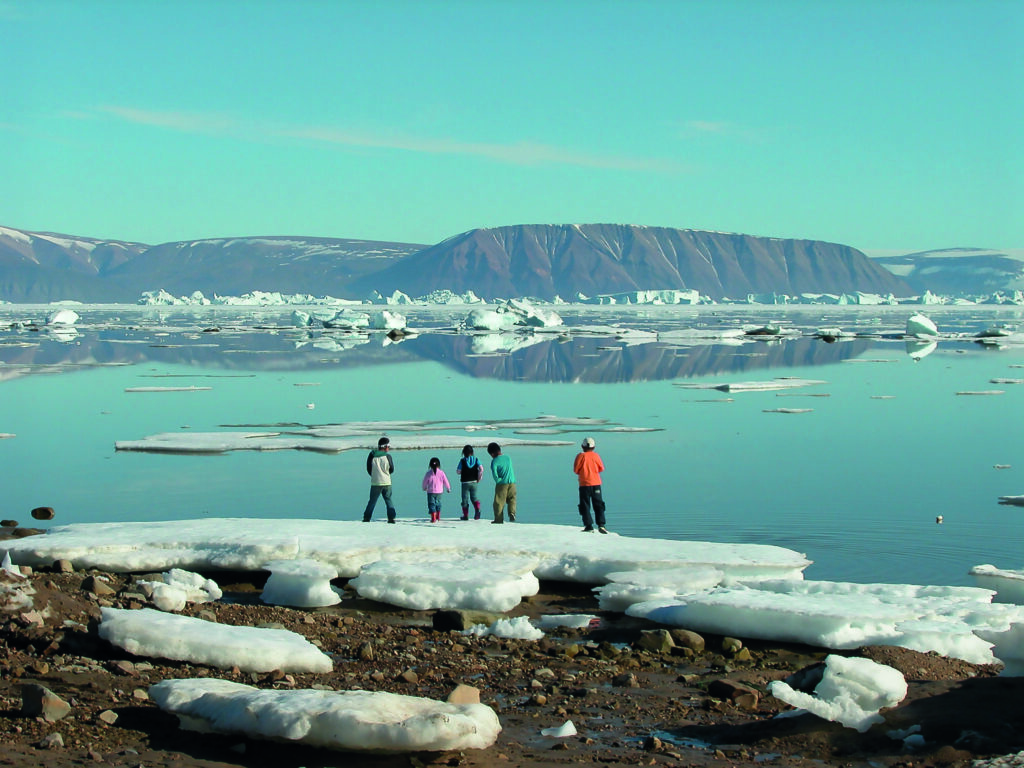
Children play at the beach in front of Qaanaaq in early summer, shortly after the sea ice has broken away. Photo credit: Saki Daorana
By WWF Global Arctic Programme


