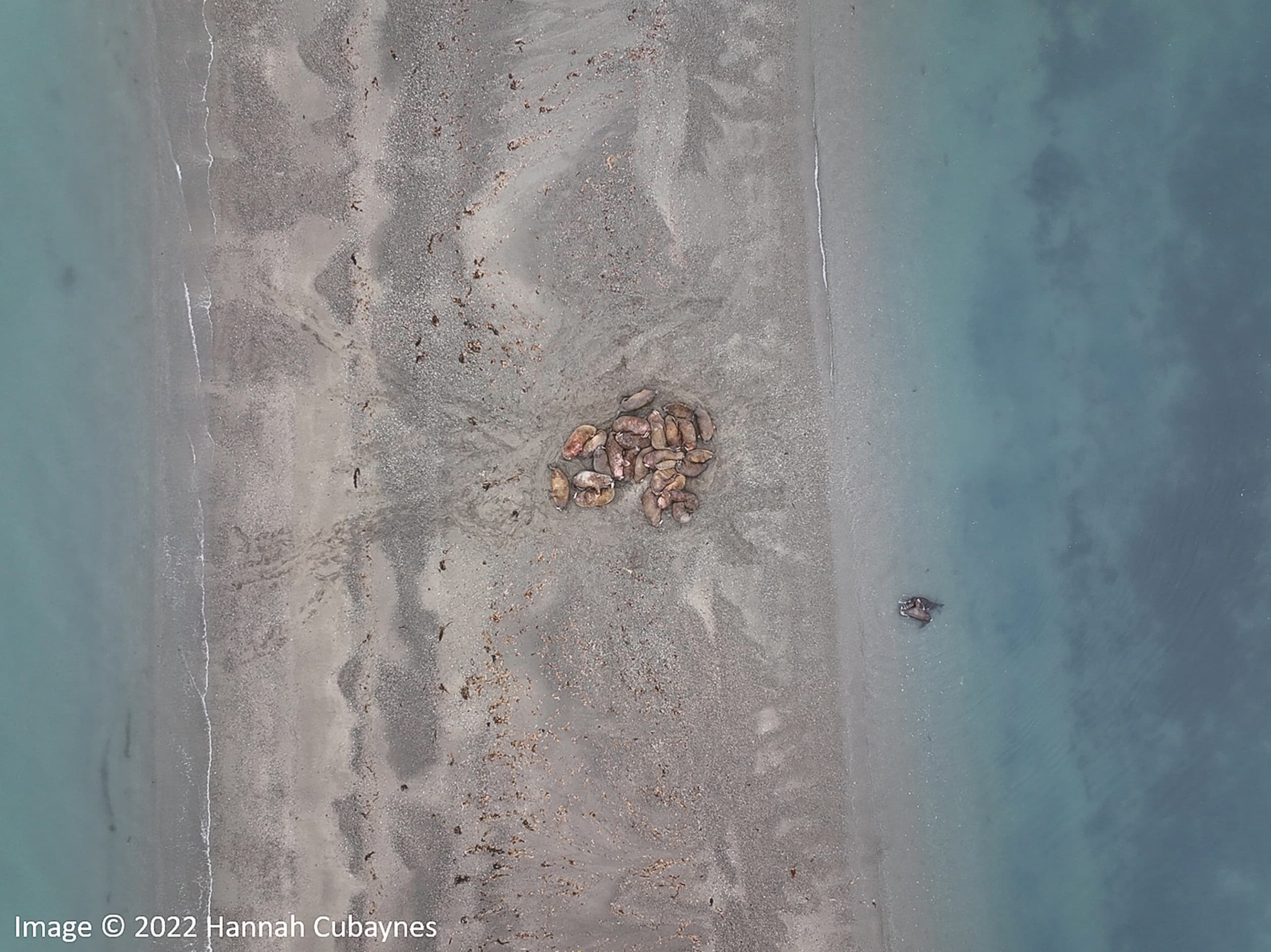
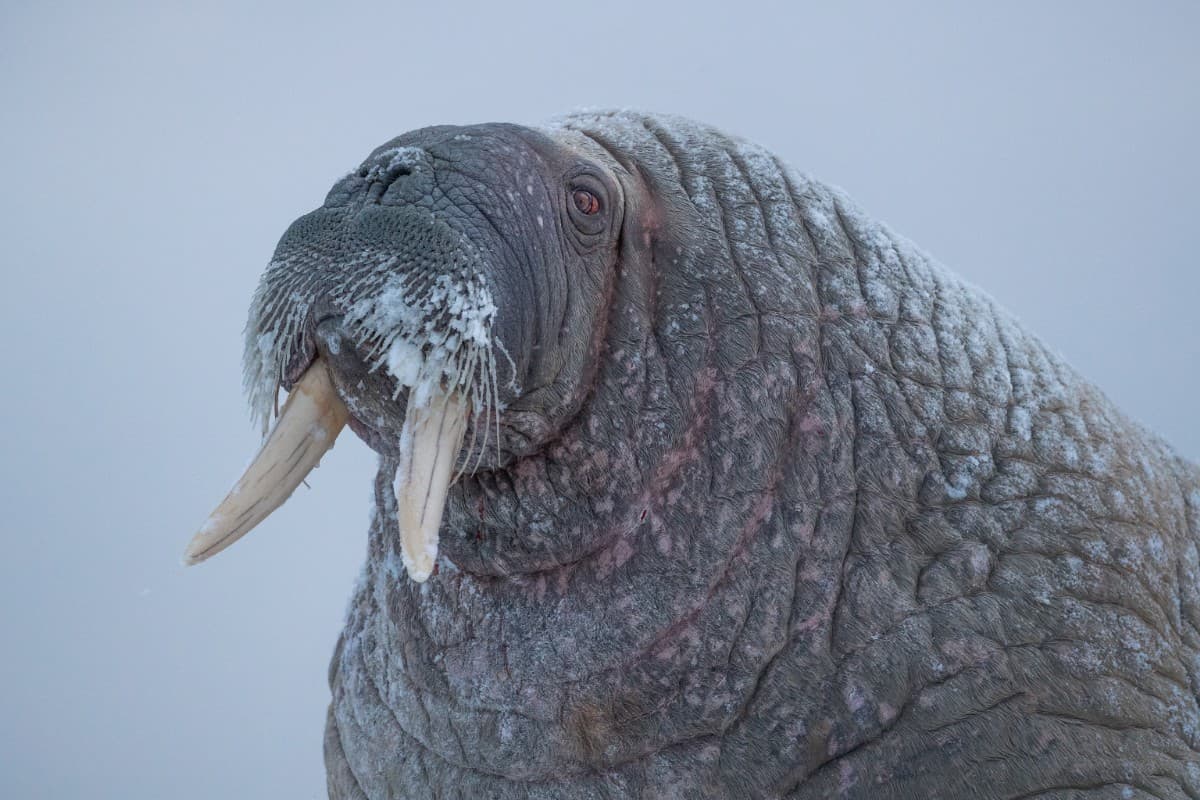
A herd of Atlantic walruses (Odobenus rosmarus rosmarus) in Foxe Basin, Nunavut, Canada. © Jeff Higdon
Navigating a louder Arctic
Studying how shipping noise affects walruses in Nunavut


Foxe Basin, Nunavut is home to some of Canada’s largest groups of Atlantic walrus (Odobenus rosmarus rosmarus), with total numbers estimated at more than 10,000. These large, tusked marine mammals can be found in the region year-round, taking advantage of the relatively shallow waters to dive to the seafloor and feed on bivalves, their preferred prey. As CORY MATTHEWS writes, plans for increased shipping through Foxe Basin have raised concerns about the negative impacts of noise on these groups—including their potential displacement.
Travis Qaunaq and Todd Ammaaq, two Igloolik residents who have been doing walrus field work for several years, guide their boats slowly through the still water, manoeuvring around the large chunks of ice still present in northern Foxe Basin at the end of June. After a few hours spent searching in the fog, the research team of Inuit experts and scientists has found a group of 10 or 12 walruses hauled out on a piece of ice.
But the larger walrus stays on the ice, allowing Travis to position his crossbow sight on the thick hump of blubber along its back. Seconds after he releases the trigger, the team’s shouts of “Tag on, tag on!” indicate success.

Two walrus (Odobenus rosmarus) resting on ice. Foxe Basin, Nunavut, Canada. © naturepl.com / Eric Baccega / WWF
Abandoned haulout sites
This work is necessary because sea ice declines across Canada’s Arctic have been accompanied by increasing vessel traffic, with much of the projected growth passing through high-quality walrus habitat in Foxe Basin. Walruses have a fairly narrow ecological niche—and Foxe Basin checks all their boxes. It is large and extremely shallow, with rich benthic communities that walruses can reach without having to dive too far. Slow-moving pack ice gives them a platform on which to rest between foraging bouts in winter, and the area’s many low-lying islands are a perfect alternative for hauling out in summer.
Research on how walruses respond to vessel disturbance in the area has been limited, but studies conducted in Hudson Bay have shown that they may abandon their terrestrial haulout sites for three or four days after being disturbed by vessels.
Most of what we know about walrus vulnerability to disturbances from shipping comes from observations of the Pacific subspecies (O. r. divergens) in Alaska. Walruses in this area can be particularly sensitive to shipping noise when they are resting at terrestrial haulout sites and will often stampede to the safety of the water. Stampedes of alarmed walruses can be a significant cause of calf mortality due to crushing. These events can also separate calves from their mothers and provoke the miscarriage of fetuses.
Increased stress and disruptions to foraging and social behaviours like mating are subtler impacts, but these can still ultimately lead to the long-term abandonment of both haulout sites and preferred foraging areas.
Concern and conservation in Igloolik and Sanirajak
Threat assessments have identified shipping as a significant hazard for walruses in the Canadian Arctic, and Inuit from the Foxe Basin communities of Igloolik and Sanirajak have expressed concerns about the impacts of shipping on this culturally and economically important animal. For millennia, walrus has been an important traditional food source, and fermented walrus (igunaq) is a delicacy in the region.
Since 2021, satellite tags like the one deployed by the Igloolik field team have been attached to more than 70 walruses to gather insights into their habitat use and responses to shipping disturbances and to mitigate potentially negative impacts. For the one- to three-month period during which the tags remain attached, they transmit locations, diving behaviours and the proportion of time spent hauled out. These data can be used to assess when and where walruses are foraging (by analyzing their dive patterns) and resting (by revealing how long they remain hauled out).
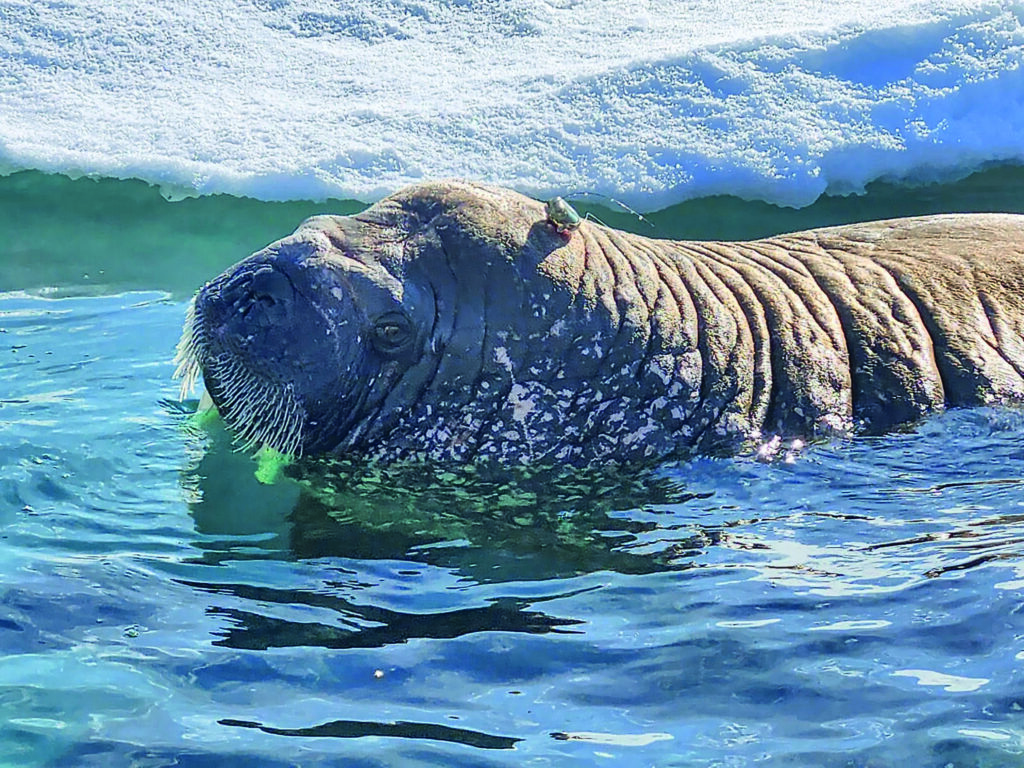
A walrus fitted with a satellite tracking tag in Foxe Basin, Nunavut. Photo credit: Fisheries and Oceans Canada
These data can be used now—before the anticipated shipping expansions happen—to delineate and protect high-use areas and establish important benchmarks for assessing changes in walrus behaviour or distribution as shipping increases.
Satellite tags also provide much-needed information on walruses where they spend most of their time—in the water. This means marine habitats, like Foxe Basin, can be included in assessments of the species’ vulnerability to disturbances. Until now, these assessments have focused mainly on terrestrial haulouts.
Anticipated shipping increases are expected to make Foxe Basin a busier, noisier place, forcing walrus to navigate a louder world—whether on land or ice or in water. With help from satellite tags, Inuit experts and scientists are collaborating to collect benchmark data and assess walrus vulnerability to disturbance as shipping routes push deeper into Arctic habitat.


By Cory Matthews
Research Scientist, Fisheries and Oceans Canada’s Arctic Fisheries and Marine Mammal Science Division
CORY MATTHEWS is a research scientist with Fisheries and Oceans Canada’s Arctic Fisheries and Marine Mammal Science Division.