Small-scale fishers near Buru Island, Maluku, Indonesia. The High Seas treaty aims to strengthen cooperation across interconnected ocean ecosystems. Photo credit: © WWF US/Sirachai Arunrugsticha
The High Seas treaty
From legal breakthrough to ocean action


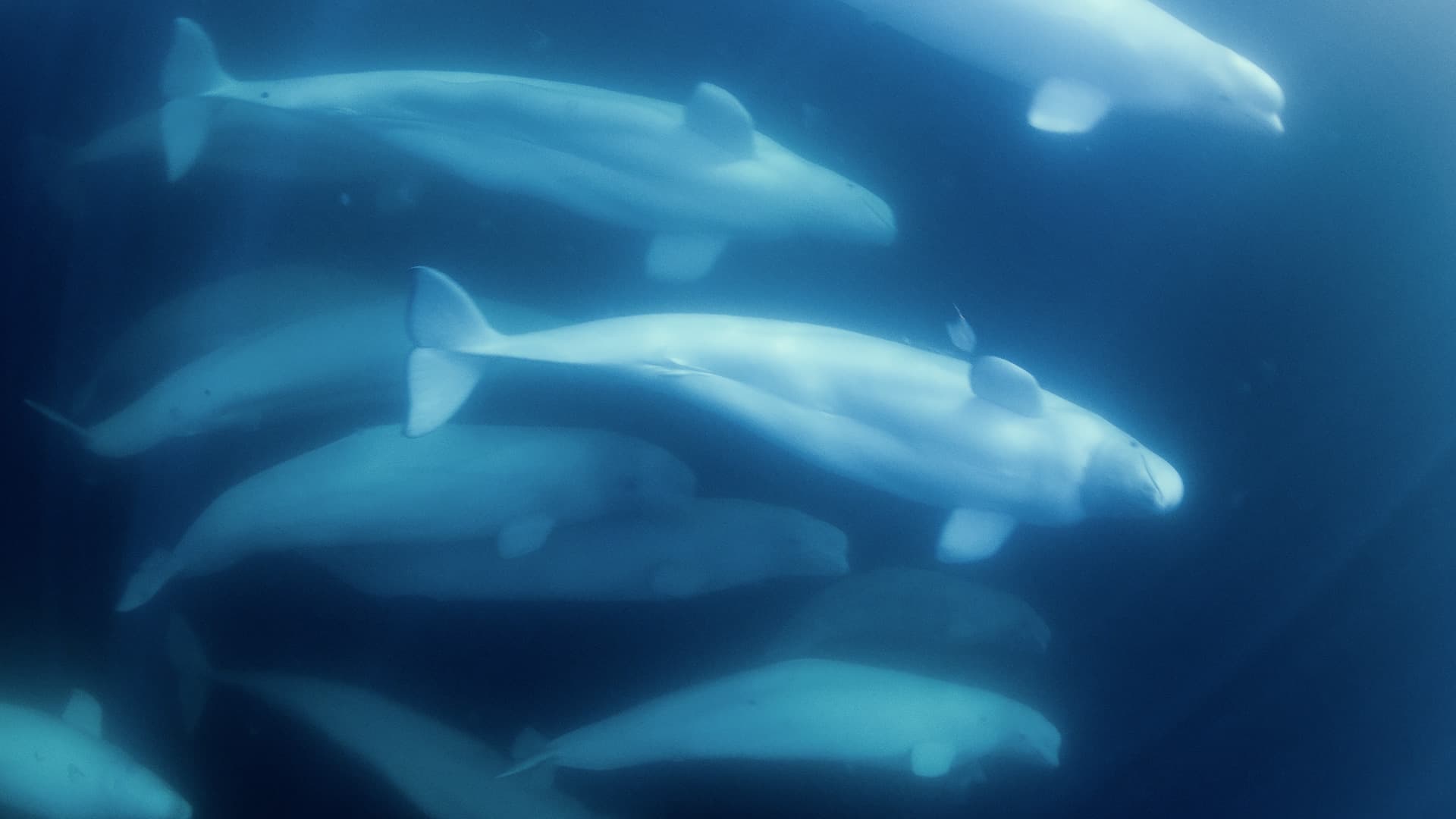
Arctic Ocean currents, species and ecosystems are endlessly connected, and the Biodiversity Beyond National Jurisdiction (BBNJ) Agreement—commonly known as the High Seas treaty—marks the first global effort to manage the high seas with that connectivity in mind. As ALISTAIR GRAHAM explains, the agreement introduces enhanced cooperation with and among previously isolated sectoral management and conservation bodies—such as those responsible for fisheries, shipping and seabed activities. It also provides for the establishment of marine protected areas (MPAs) and operationalizes commitments to environmental impact assessments (EIAs) as set out in the United Nations Convention on the Law of the Sea.
After nearly two decades of development work, the United Nations adopted the High Seas treaty in 2023. More formally known as the Agreement on the Conservation and Sustainable Use of Marine Biological Diversity of Areas beyond National Jurisdiction, the treaty encompasses the high seas beyond coastal state exclusive economic zones and the seabed area administered by the International Seabed Authority.
Sustained commitment and much patience
As with all new treaties, realizing this one’s potential will require nongovernmental organizations, scientists and advocates—including WWF—to persuade states and their governments to change how they do business, not only in terms of how they cooperate with each other internationally, but how government agencies cooperate internally. It will also require interested parties to adjust their advocacy strategies.
Moving from the current situation of isolated sectoral management to holistic, integrated, ecosystem-based management will require sustained commitment and much patience from everyone with an interest.
The provisions of the treaty are a package deal between the global South of developing countries and the global North of developed countries. In return for their support, developing countries gain access to a system for sharing the benefits of marine genetic resources (biological materials with potential commercial or scientific value) along with stronger commitments to capacity building and technology transfer. As a result, it is important to ensure that ambitions related to MPAs and EIAs are pursued in a way that strengthens such development assistance.
From commitment to cooperation
Part 1 of the BBNJ Agreement establishes a cooperation framework that strikes a prudent balance between not undermining existing sectoral management arrangements and strengthening and enhancing cooperation with them.
This means collaborating not only with and among formal sectoral management bodies—such as the International Seabed Authority, International Maritime Organization, and regional fisheries management organizations—but also with and among a wide range of other instruments and bodies with expertise in marine conservation and sustainability.
These include the Convention on Biological Diversity, the Convention on International Trade in Endangered Species of Wild Fauna and Flora, the International Whaling Commission, and the Convention on the Conservation of Migratory Species of Wild Animals (and its related agreements), among many others. In fact, a new term has been coined to describe all these arrangements collectively: legal instruments, frameworks and bodies, or IFBs.
The great challenge and opportunity for WWF and other interested parties involves a fundamental shift in advocacy strategy. Rather than approaching sectoral management bodies as outsiders hoping to influence decisions, we can now work with governments’ conservation lead agencies to engage IFBs that have conservation expertise—and get those IFBs to seek cooperation from their sectoral counterparts in ways that advance shared conservation objectives.
WWF’s global network of national and regional offices positions us particularly well to work with government agencies to deliver cooperative outcomes.
No longer “freedom of the high seas”
But the biggest news resulting from the adoption of the BBNJ is that we now have a legal framework for the adoption of ecologically representative, well-connected networks of cross-sectoral MPAs for conservation purposes—networks that, by design, can span both national waters and areas beyond national jurisdiction, consistent with guidance from the International Union for Conservation of Nature.
The ancient “freedom of the high seas” is now recast: instead of the oceans belonging to no one, they can now be seen as belonging to everyone.
—Alistair Graham, conservationist who worked with WWF International on the development of the BBNJ Agreement.
The capacity to establish MPAs also establishes biodiversity conservation as a legitimate use of ocean space alongside traditional uses like shipping, mining or fishing.
The BBNJ Agreement also operationalizes the provisions in the United Nations Convention on the Law of the Sea that require EIAs for all planned activities as part of the broader commitment to protect and preserve the marine environment.
This creates a valuable new opportunity: WWF and other organizations can now call on regional fisheries management organizations to ensure that joint EIAs are conducted for all participants in the fisheries under their management authority, with explicit attention to cumulative impacts.
Similarly, we hope to persuade the International Maritime Organization to develop a safe shipping corridors approach—one in which joint EIAs for all ships using a given route would establish shared responsibility arrangements to reduce risks to wildlife.
From global framework to regional action
But these new opportunities will not achieve themselves. Interested parties and government agencies with an interest in the world’s oceans will need to get together at appropriate scales to explore what is possible.
WWF has been arguing that we should take a “regional implementation of global standards” approach, where cooperating at the scale of the regional ocean basin offers the best balance between ecological and diplomatic realities.
The Arctic represents one of the most compelling early opportunities for BBNJ implementation. The existing Arctic Council is well positioned to lead the way by convening the broad range of interested parties that effective implementation demands. Through that process, the council can foster the establishment of MPA networks, explore whether any reform to existing institutional arrangements is warranted to deliver enhanced cooperation, and ensure that EIAs are conducted for all planned activities in the region.
The ocean doesn’t stop at national borders—and now, finally, neither does our commitment to protecting it.


By ALISTAIR GRAHAM
ALISTAIR GRAHAM is a lifelong conservationist with four decades of experience in international treaty development. For the last 20 years, he has worked with WWF–International on the development of the BBNJ Agreement.