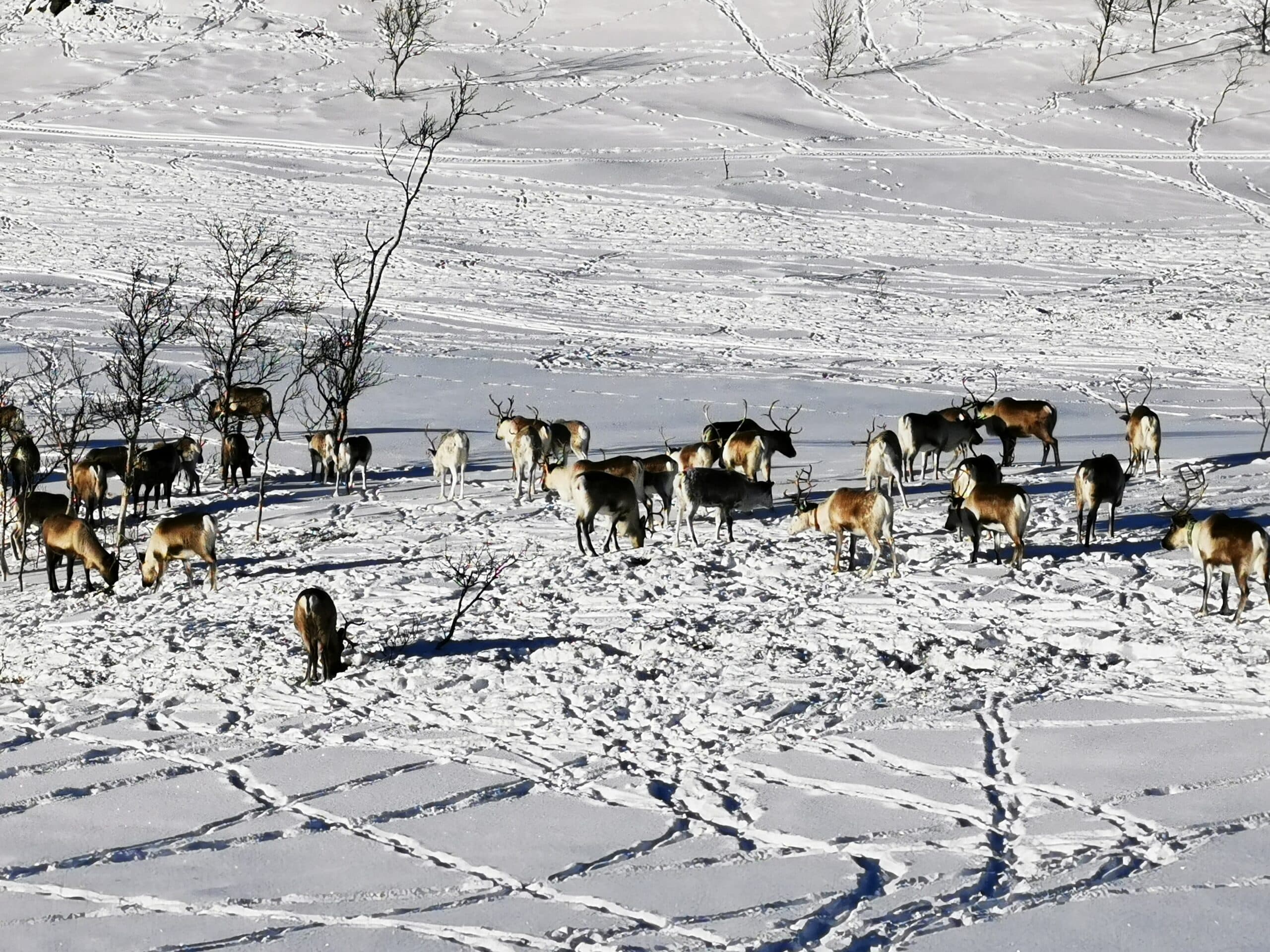
© Juhán Nikolaus Wuolab Wollberg
A year in the life of a Sámi reindeer herder
If you ask a reindeer herder what they do, the answer will be that it depends on the herd, the weather and the season. The practice of herding reindeer is not simply a way of producing food, it’s a lifestyle where the herder follows the reindeer across the land, throughout the whole year.
Reindeer herding is far from monolithic; it’s practiced by several peoples, Indigenous and non-Indigenous, in the United States (Alaska), Canada, China, Greenland, Mongolia, Russia, Scotland, and in Sápmi, the land of the Sámi. Sápmi is not a state, but a geographical area spanning across the borders of Norway, Finland, Sweden and northeastern Russia.
Even within Sápmi, there’s still major variation in how reindeer herding is practiced. Juhán Nikolaus Wuolab Wollberg, a junior Sámi reindeer herder, is the first to acknowledge this. “There can be a big difference even between Sámi families in the same area.”

© Juhán Nikolaus Wollab Wollberg
Spring: calving seasons begins
In Juhán Nikolaus’ family, the reindeer herding year starts at the end of April, when the reindeer cows give birth. In the Northern Sámi language, the month of May is known as miessemánnu, or the month of the reindeer calf.
“The important thing during this period is to give the females space and peace to live undisturbed and to bond with their calves,” he explains. “You can be nearby and check that everything is fine, but it has to be from a distance.”
While the reindeer cows are calving, the male reindeer is antlerless at this time of year. Stripped of their usual status, they form what Juhán Nikolaus affectionately calls the “bachelor club”. “They can get up to all sorts,” he laughs. Much of his energy in the spring goes into keeping these restless males away from neighbouring farmers’ fields.
Spring-summer: the herd gathers and moves to higher grounds
In Sámi culture, there are not four, but eight seasons. These are connected to reindeer herding. The season of giđđageassi, meaning “spring-summer”, is the time when the male and female reindeer begin to find each other again. Juhán Nikolaus joins them as they move towards higher ground.
“I pack my car with everything I need — equipment, clothes, my knife, my dog. Food for both of us. And I drive as far as I can, ideally all the way to the cabin.”

© Juhán Nikolaus Wuolab Wollberg
Summer: The reindeer herders mark the calves
For Sámi reindeer herders, summer is the time of calf marking. The calves are marked in their ears, indicating which reindeer herder it belongs to. In Sámi culture, calf marking is a family event. Families and relatives come together to help out with the labour-intensive process, mainly working at the cooler nights, lit by the midnight sun. It’s hard work, but also a time for laughter and community. For many, it’s the best part of the year.
Read more about the role of the reindeer in Sámi culture
But climate change is beginning to disrupt the seasonal rhythm. In the summer of 2025, the summer arrived unusually late. “We had a very late calf-marking because we couldn’t access our cabins,” Juhán Nikolaus explains. “The snow was so deep we would have needed snowmobiles. That hasn’t been the case every year.”
Autumn-summer: the mushrooms arrive
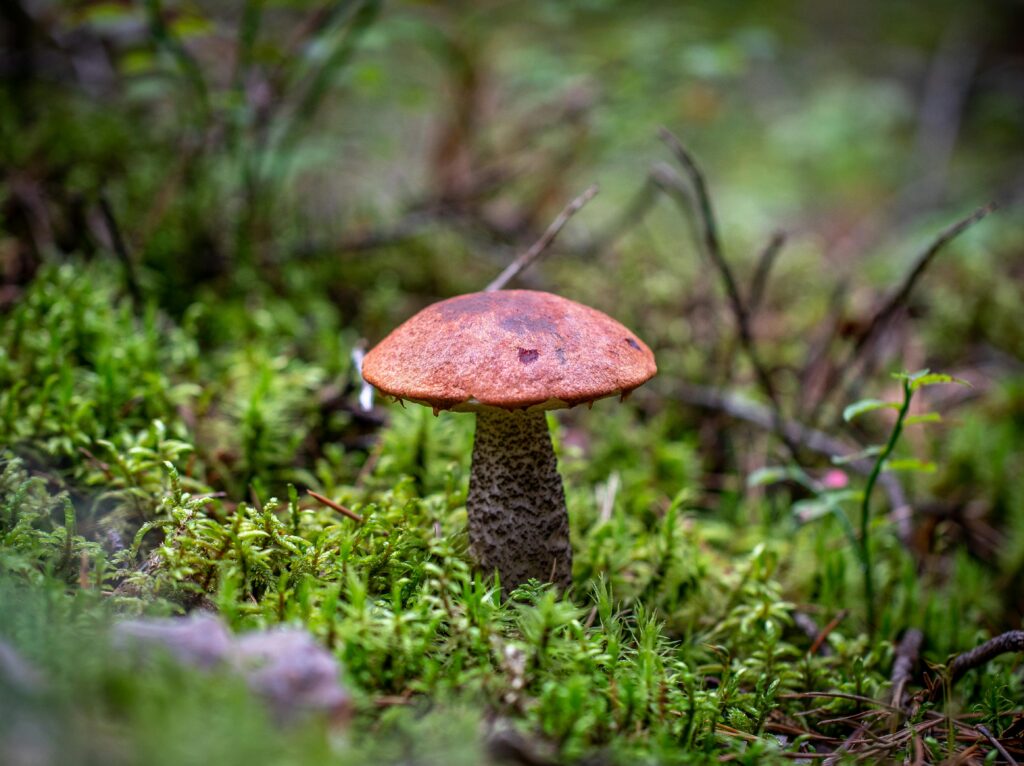
After the calf marking, there’s a calmer period for reindeer and herder alike. The reindeer graze and build up much needed reserves for the winter. Around August, they are in their prime. But when the mushrooms appear, all inhibitions disappear. “They become almost like addicts. The reindeer will do almost anything to get to the mushrooms”, Juhán Nikolaus jokingly says.
© Egor Kamelev / Unsplash
Autumn: rutting season
The bulking for winter continues more or less until the rutting season. For Juhán Nikolaus and his family’s reindeer, this period begins around the second week of September. If it was difficult to keep the herd together during the mushroom season, then it’s practically impossible once the rutting begins.
“If you had 200 animals in the herd, you might suddenly have 20 small groups moving in different directions. How are you supposed to hold that together?”.
The bulls, emboldened, can become aggressive and even dangerous during this time. After the rutting, the bulls lose their antlers and drift off, returning to eating mushrooms and rebuilding their energy reserves. Then it continues like this until the first snow arrives. At that point, the reindeer begin to gather again, and some form of herd structure returns.
Autumn-winter: preparing for the cold
When the snow cover is set on the ground, the reindeer move to eating lichen. The ability to digest lichen is one of the species unique features, and an adaptation to the harsh environment of the Arctic. At this time, Juhán Nikolaus and his family decide when to move the herd, how to best use their lands for winter grazing and assess the conditions of the reindeer and the coming winter. They aim to have the herd settled in their winter lands by December and keep it there until March.
If you look at the reindeer, they too become tired and worn. It is not a small thing, surviving
Winter: reindeer and reindeer herder survive in the darkness
The winter in Sápmi is long and hard. But to Juhán Nikolaus, the winter is just as important as the work in the other seasons. For a reindeer herder, there’s always something to do, whether that’s fishing, cutting timber for firewood, or being with the herd. “Work with reindeer rises and falls in intensity. When it is less intense, that does not mean you work less, you simply do different work”.
A common complaint among people who have moved to the Nordic countries is the darkness in the winter. As a Sámi, this is not something Juhán Nikolaus can relate to.
“Of course, one can be tired or worn out – but that’s part of the season. If you look at the reindeer, they too become tired and worn. It is not a small thing, surviving,” he reflects. “And especially if you compare people born and raised in the north with those who move here, we have winter activities that sustain us.”
Spring-winter: The circle closes
At the end of winter and before calving begins, around 25 April, Juhán Nikolaus and his family move from the winter grazing lands back to the spring and summer pastures. The period before and during calving is a sensitive time for the reindeer cows. If they become spooked by predators or human activity, the stress can cause a miscarriage. During this season, it’s especially important for visitors in Sápmi to be mindful of the reindeer and keep a respectful distance.
In order to move the herd, the reindeer herders are reliant on the weather and the ice being strong enough to carry the reindeer. “In recent years, it has not held as long as late April. That is another sign of change.”
You build a relationship with the reindeer – you almost recognise them by the way they look up, graze, or lie down

© Juhán Nikolaus Wollab Wollberg
The best part of being a reindeer herder
To Juhán Nikolaus, the best part of being a reindeer herder is the connection between the reindeer and the people. “You build a relationship with the reindeer – you almost recognise them by the way they look up, graze, or lie down.”
Reindeer herding comes with its challenges. Worries about climate change. Increasing increasing pressure from extractive industries seeking access to Sápmi’s natural resources, threating the future of Sámi reindeer herding. Facing racism, exotification and microaggressions.
But to Juhán Nikolaus, the life of a reindeer herder is a good one. “It is a good life, a healthy life. A demanding life, always has been, always will be, but isn’t that the point?”. It’s something he thinks Sámi and other arctic Indigenous Peoples, such as Inuit or Nenets, share. “It’s important to acknowledge Indigenous trauma, but I like to focus on Indigenous brilliance.”