
The connected Arctic
At a time when the world seems increasingly divided, it is worth reflecting on what still connects us. Few things do so as powerfully as the ocean—a vast blue commons that binds our planet together.
In this issue of The Circle, we take a closer look at the many connections that sustain the Arctic, but also the threats that come from an increasingly interconnected world. Could an increase in shipping bring new species into Arctic waters? What does the High Seas Treaty mean for the protection of Arctic waters? And what can the extraordinary, annual round trip of the Arctic tern tell us about global connectivity? These are some of the stories you can read in The connected Arctic, the latest issue of The Circle.
Stories from this issue

Editorial: The blue bond that connects us all

News in brief

The Arctic’s warming climate is accelerating the spread of disease

Bringing whale superhighways to life

Niqipiaq, relationships and conservation in the Arctic

How the Arctic is connected (and disconnected) by pollution

Ghost gear in Greenland

From legal breakthrough to ocean action

New maps show shrinking caribou migrations

Could an increase in shipping bring new species into Arctic waters?

What our planet’s greatest travellers can tell us about Arctic connectivity

What the caribou taught Don Russell
The back cover

Credit: Engraving from Paul du Chaillu, The Polar World (1883), Charles Scribner’s Sons.
Generations of connection
This 19th century European illustration depicts an Inuit hunter paddling a kayak during a hunt—an enduring example of the deep connections between Arctic peoples, marine species and ocean ecosystems. The Inughuit of northwestern Greenland continue to practise a traditional way of life, using kayaks and harpoons to hunt narwhal. Narwhals have long been harvested by Inuit in northern Canada and Greenland, and a regulated subsistence hunt continues today
More from The Circle


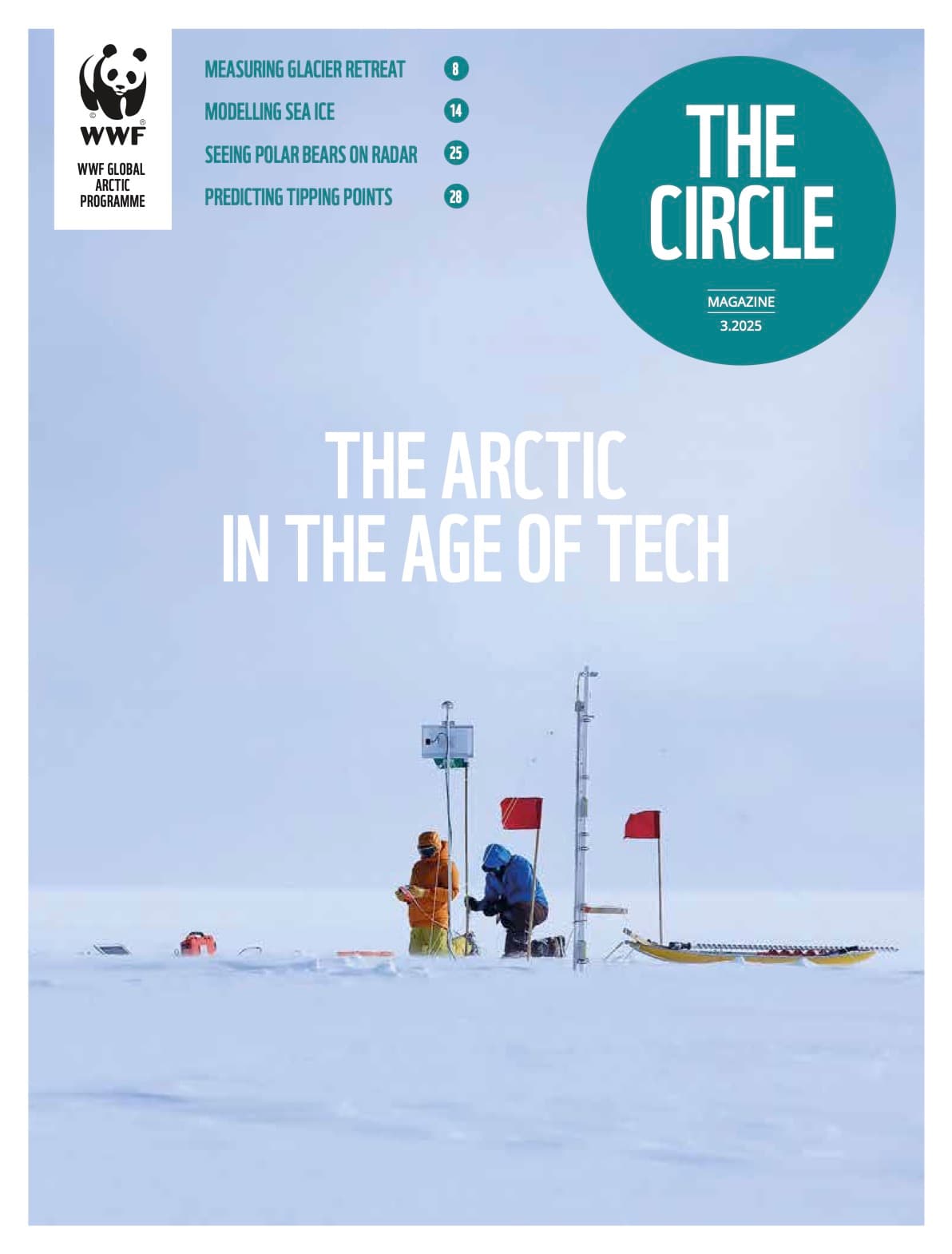
About The Circle magazine


Quarterly
WWF Arctic Programme publishes the magazine four times per year and each issue zeroes in on a theme and presents a range of stories.


Actions
It covers the key climate risks are for the Arctic—and what researchers and decision-makers in the eight Arctic nations are doing.

Perspectives
We aim to hear from contributors in a selection of Arctic countries—from youth to Indigenous communities to policymakers to scientists.

Themes
Stay informed about the environmental and development issues affecting wildlife, ecosystems and people in the Arctic today.