
Children play at the beach in front of Qaanaaq in early summer, shortly after the sea ice has broken away. Photo credit: Saki Daorana
News
A commentary on EU’s new Arctic strategy
- ArcNet
- Biodiversity and nature
- Central Arctic Ocean Fishing Agreement
- Climate Change
- Communities
- Deep sea mining
- Governance
- Oil and gas
The EU wants to bolster its collaboration with the countries, economies and peoples of the Arctic. The new strategy reaffirms important commitments on climate change, but there is room for the EU to go further, say experts at WWF’s Global Arctic Programme.
Under the subheading “Europe’s Northern Neighbourhood: A New Strategy for the Arctic”, the EU seeks to reaffirm its relevance in the region and confirm its priorities at a time when economic and security issues take centre stage.
The strategy’s recognition of climate change as a defining threat to the Arctic is welcome, but is it good enough?
Oil, coal, gas, and deep-sea mining: still a ‘no’
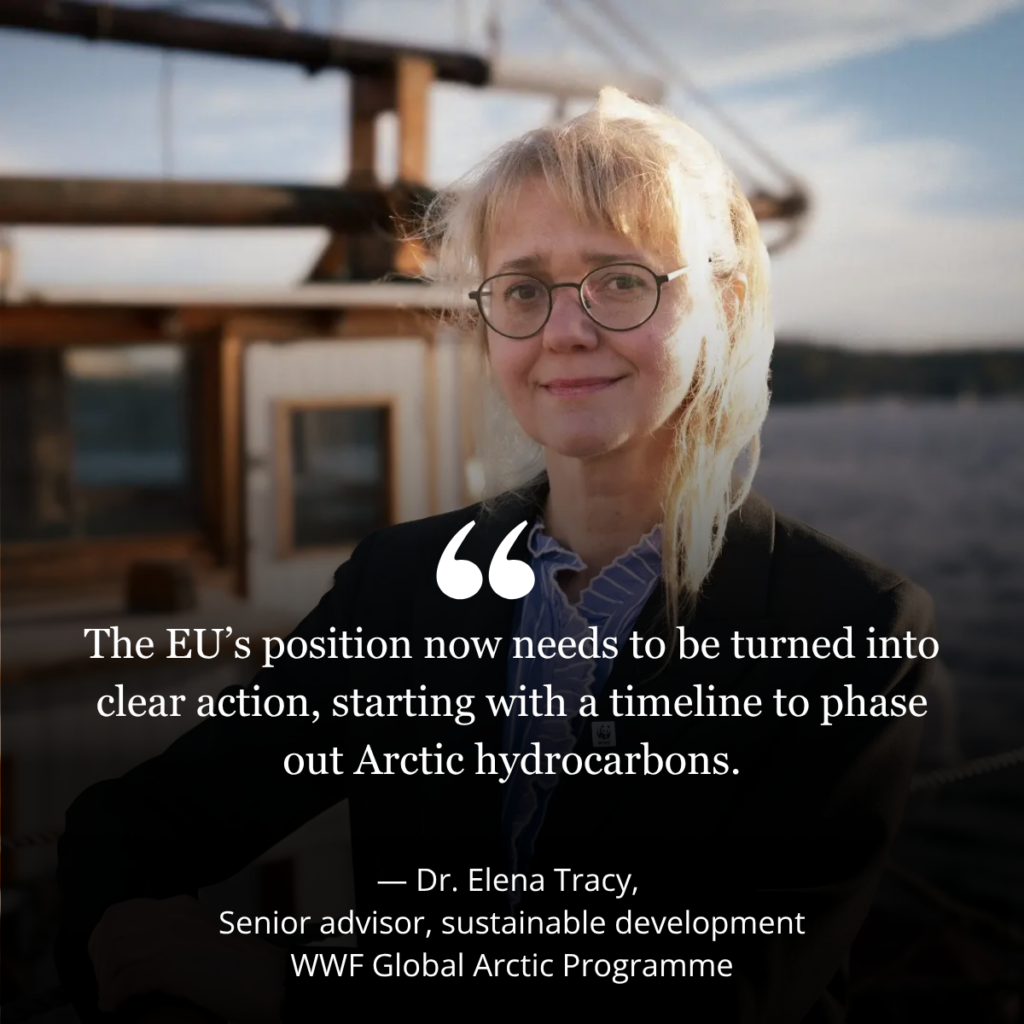
The EU has reaffirmed that oil, coal and gas in the Arctic should stay in the ground. That is the right position to take. Any new Arctic oil and gas extraction will not help Europe’s energy security because it will come too late. Instead, it will only lock in fossil fuels for decades.
In fact, the EU should revisit its 2021 aim of establishing a multilateral legal obligation against new Arctic hydrocarbon development.
A continued precautionary stance on deep-sea mining is also good. This means the EU will continue to advocate against deep-sea mining until the scientific gaps on deep sea ecosystems are properly filled and the necessary provisions for the effective protection of the marine environment are in place.

Martin Sommerkorn.
Establishing marine protected areas
The commitment to use the BBNJ Agreement to protect areas beyond national jurisdiction is encouraging. The same goes for efforts to establish marine protected areas under the Convention for the Protection of the Marine Environment of the North-East Atlantic (OSPAR Convention).
To make this count, the EU should back these commitments with financial, technical and scientific support, and work with Arctic States toward an ecologically coherent, Arctic-wide network of protected and conserved areas.
Dr. Martin Sommerkorn, Head of Conservation, WWF Global Arctic Programme
Continued support for multilateral platforms
The strategy’s recognition of the Arctic Council as the main forum for pan-Arctic cooperation is important, as is its commitment that new EU-led cooperation will complement, not duplicate, existing structures.
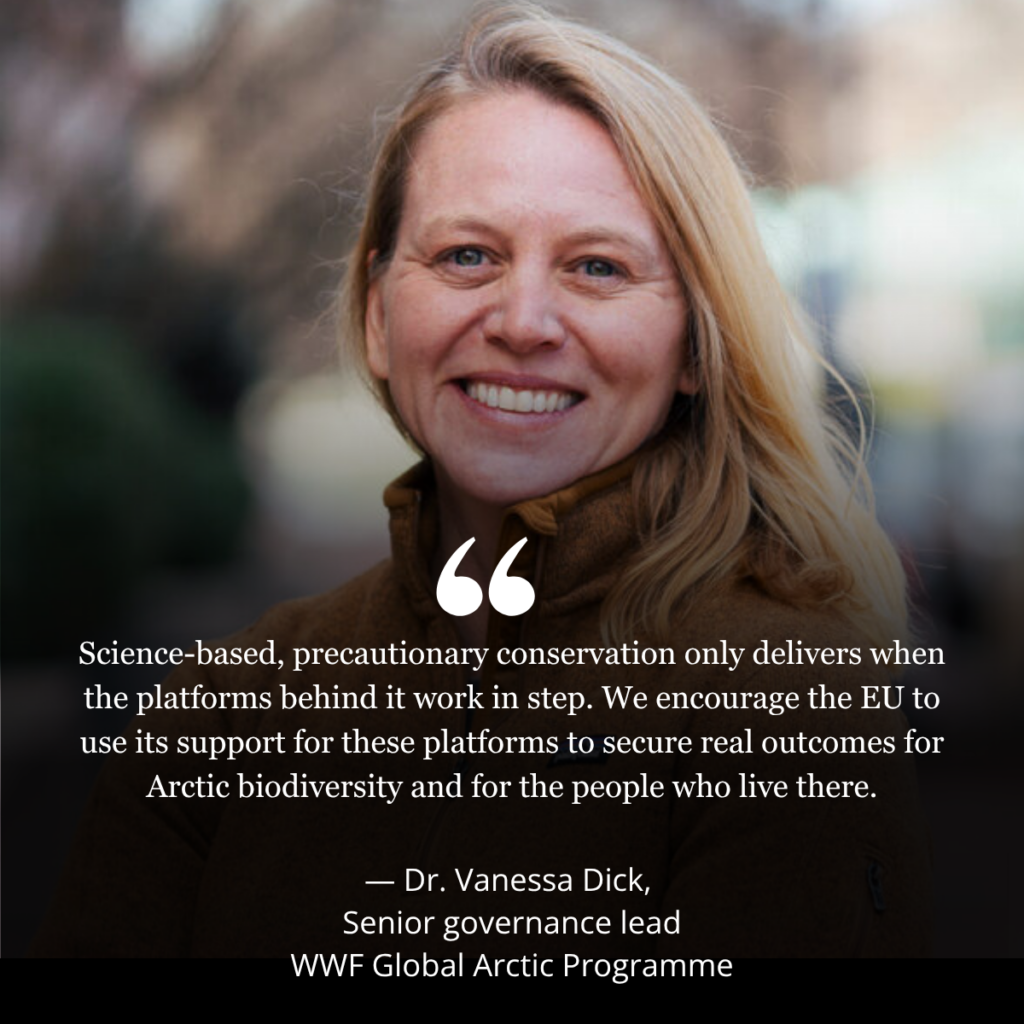
Pan-Arctic effectiveness depends on effective coordination. The EU’s support for established multilateral platforms such as the International Maritime Organization, the Central Arctic Ocean fisheries agreement, the BBNJ Agreement and OSPAR is important.
This is because these platforms matter when they deliver coordinated outcomes for the Arctic environment and its communities.

© Martha de Jong-Lantink / Flickr
Cutting black carbon emissions
The strategy is strong on pushing for safe and sustainable shipping in the Arctic, although it signals an intention to allow shipping in some of the world’s remotest areas. This is problematic because trans-polar trade routes pose unique challenges for vessel safety and protection of the marine environment.
“A commitment to eliminate black carbon emissions from shipping while implementing the Polar Code and championing low carbon and renewable fuels for ships calling at EU ports, is encouraging,” says Elena Tracy.
In fact, the proposal for mandatory regulation for black carbon emissions from ships is a big win. Black carbon from shipping is accelerating the melting of sea ice in the Arctic, a region which is warming four times faster than the rest of the planet.
The EU’s commitment to tackle black carbon will help the adoption of mandatory measures across the Arctic. Furthermore, the EU advocates for the definition of wider Arctic waters (above 60°N) to ensure binding regulations will cover the actual footprint of Arctic shipping.
Giving young people a stronger voice
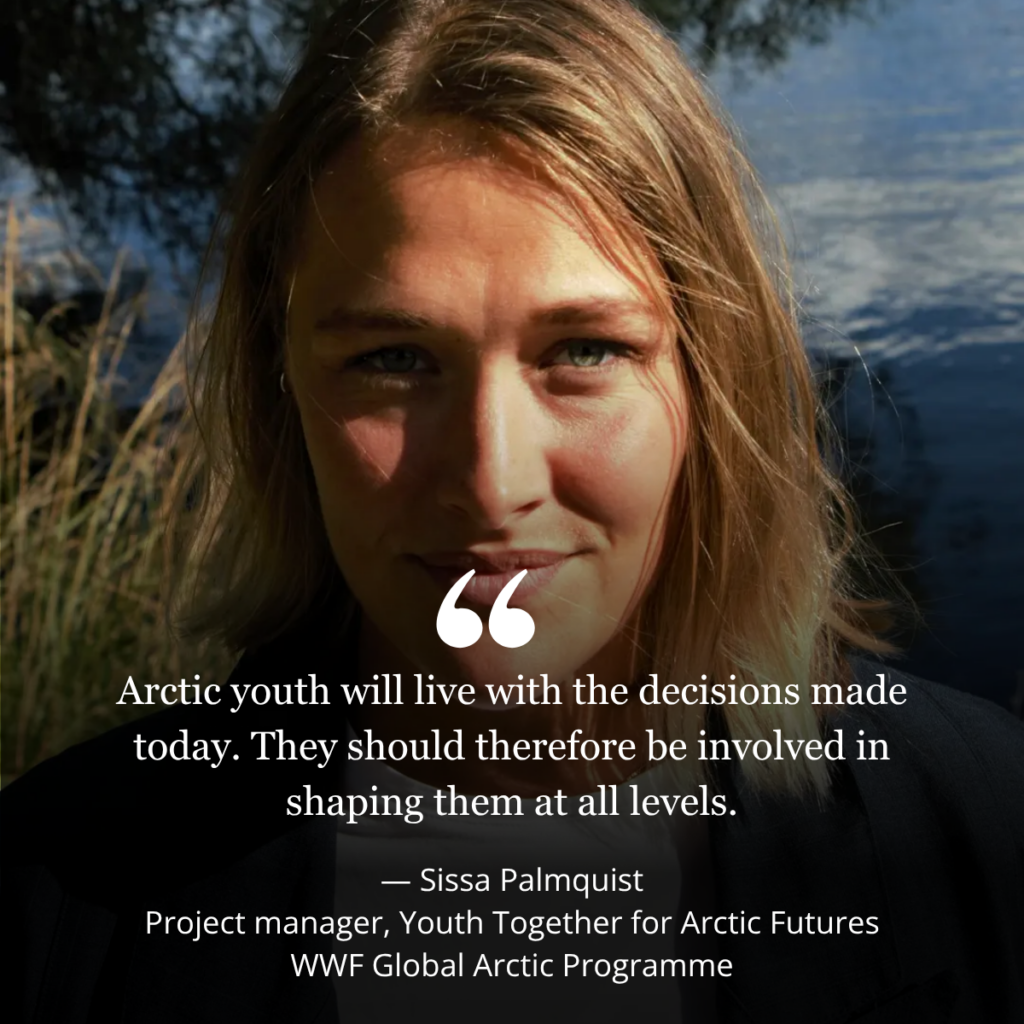
The establishment of a Youth Sounding Board in Nuuk is a positive step towards creating institutional structures where young people are represented. Similar structures should be established across all of EU’s Arctic decision-making processes.
A continuation of the Arctic Youth Policy Dialogues is also important. A hope is that the EU will further develop this as a core element of the broader Arctic Youth Dialogue, ensuring youth participation that is meaningful, safe, inclusive, and representative.
Is the strategy good enough?
Overall, the strategy offers encouraging reading, but the ‘Northern neighbourhood’ vision gives nature little prominence. It also remains to be seen what the EU means by “environmentally responsible economic development”.
Several measures such as financial and technical support for protected area networks, zero-emission shipping and action on underwater noise, are not included in the strategy. There is no commitment to elevating the Arctic in global negotiations.
While the strategy promotes nature-based solutions and adaptation measures built on Indigenous and local knowledge, the EU must walk the talk on this.
“Initiatives on Arctic development and resilience-building must be centred on the conservation and sustainable use of Arctic nature and the needs and rights of the Peoples that call the region home,” says Martin Sommerkorn.
Concludes Vanessa Dick: “As the strategy moves to implementation, we hope environmental ambition will carry the same weight as its security and economic priorities. We look forward to working with the EU, Arctic States and Indigenous Peoples to strengthen cooperation across the whole Arctic.”
By WWF Global Arctic Programme


