Siorapaluk in west Greenlandic, by locals called “Hiurapaluk” which refers to the small sandy beach at the village shore. Photo: M. Lynge
News
Life in the Arctic: when the ice changes, everything changes
- Climate Change
- Communities
- Denmark
- Greenland
- Last Ice Area
- Narwhal
As part of a field work to Qaanaaq, Malene Lynge, former head of WWF’s Greenland programme, reflects on the experiences by hunters and families in northern Greenland and what they can teach us about a changing Arctic. Their responses reveal a culture under pressure, but one that refuses to disappear.
The narwhals appear first as small movements in the distance. Then another pod. And another one.
After almost 15 hours of watching the water near Qeqertat, a settlement near Qaanaaq, it is almost impossible to keep count. Perhaps 10 or 12 pods passed through the fjord—around a hundred narwhals altogether.
Extraordinarily difficult
Silence is essential to a successful hunt. The hunters in their boats stay far back. Narwhals are highly sensitive to noise, and the sound of engines can cause them to change direction or move away.
Narwhal hunting from qajaq is extraordinarily difficult. The hunter must read the sea, sun, wind and the animals—their speed and distance to him—simultaneously.
Eventually the hunt was unsuccessful but it revealed something that can be difficult to understand from more conventional reports about Arctic wildlife management: the knowledge, patience and precision that lie behind a traditional hunt. It is an art passed down through countless generations.
Watch the narwhal pods in the video below:

Hiurapaluk is the most northern village in Greenland, 50km from Qaanaaq and only 100km from the nearest coast of Canada. Photo: M. Lynge
Knowledge is something you do
During my field work in the Qaanaaq region during the summer of 2026, I heard versions of that same story. Not necessarily about narwhals, but about knowledge.
Knowledge of sea ice, currents, wind, snow, clouds, animals and places. Knowledge accumulated over generations and learned through presence and participation.
Again and again, people described learning in essentially the same way. They followed. Children went with parents and grandparents. They watched and imitated through playing. And gradually they were allowed to participate.
A hunter from Siorapaluk remembered joining his first hunt at around twelve years old. He learned to fish, drive a dogsled, butcher animals and understand the landscape through direct participation.
A woman remembered learning to work sealskins, sew clothing, build snow shelters and travel with her family.
Another hunter described the Qaanaaq region simply as his own backyard.
For him, knowing the landscape means knowing where cracks form in the ice, how currents move beneath it, when animals arrive and which routes are safe.
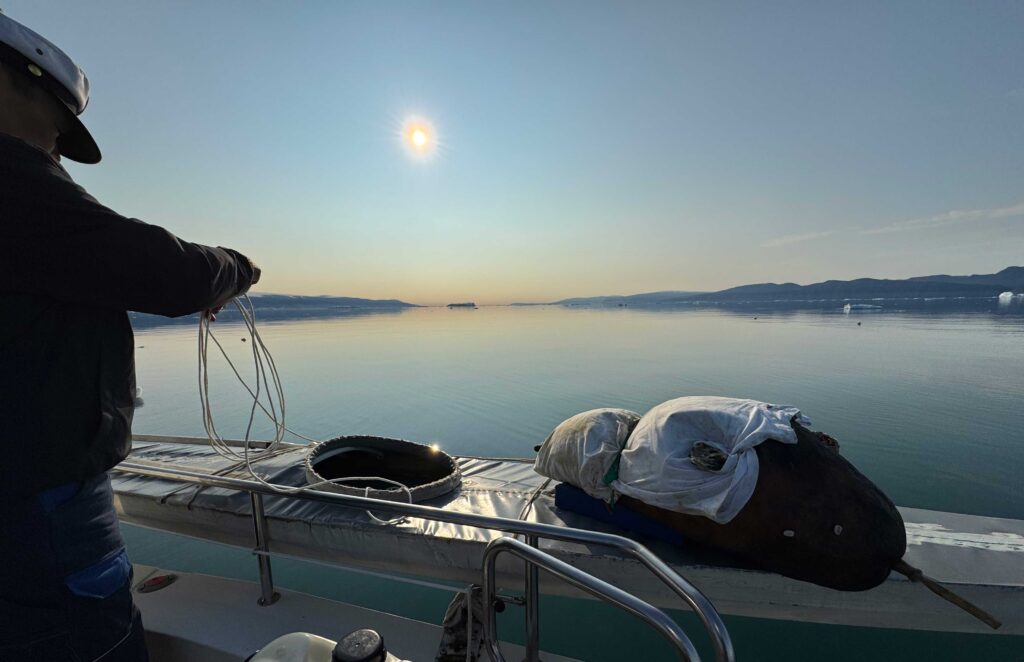
A hunter, Arqiunnguaq Qaerngaaq, preparing equipment for narwhal hunting. Photo: M. Lynge
“Don’t take more than you need”
Another insight from my interviews with hunters and families in Qaanaaq was about restraint: do not harvest more than you can actually use, or as one hunter expressed it, “do not catch more than there is room for in the freezer.
It is a strikingly practical definition of sustainability.
Several people also spoke about respecting animals, hunting grounds and other communities’ territories. And many wanted the same principle of respect applied to their knowledge. If researchers ask people to share observations accumulated over decades, interviewees want to know what happens to that knowledge afterwards.
Who owns it?
Who can access it?
How will it influence decisions?
And will anything come back to the community?
These questions matter increasingly as interest in the rapidly changing Arctic grows. They also echoed strongly during the interviews in Qaanaaq, where respectful research was described as something that should benefit the community and give local people a genuine role in shaping, correcting or even rejecting research that affects them.
Less time to learn
One of the profound consequences of changing ice conditions may be something that never appears on a climate graph: less time to learn.
When families cannot spend the same amount of time travelling and staying at hunting grounds, younger generations have fewer opportunities to acquire knowledge in the way previous generations did.
The danger is therefore not only losing particular hunting opportunities. It is interrupting the process through which knowledge itself survives.

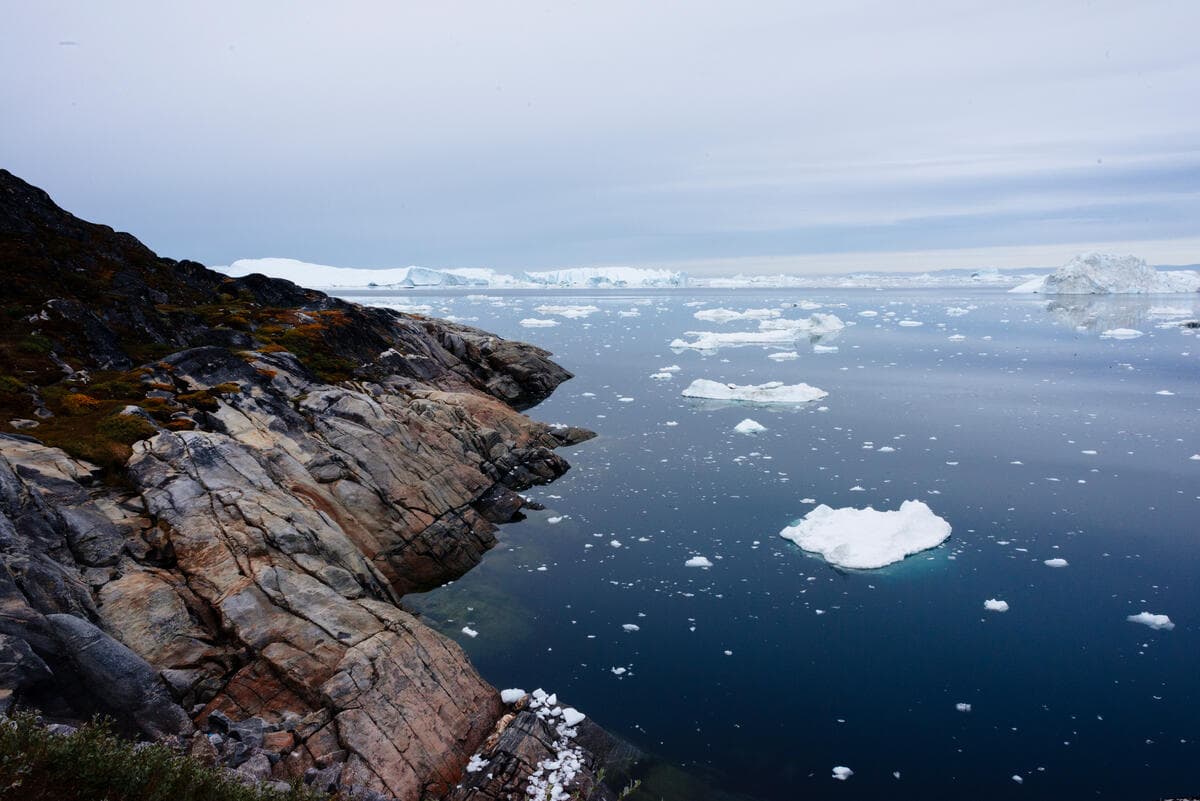
The icebergs loom like mastodons in the fjord off Qaanaaq. They provide important hunting and fishing grounds, as well as shelter for seals when they give birth. But their numbers are declining—and according to local hunters, fewer icebergs make it harder for the sea ice to form properly. Photo: M. Lynge
The ice no longer follows the old calendar
Across almost every interview, people mentioned the sea ice. Older residents remember a time when the sea froze much earlier in autumn and remained covered far longer into spring and summer.
One hunter estimates that only a third of the sea ice remains from its original dimension/size. Where stable winter ice once provided a platform for travelling and hunting, the season of safe ice has become considerably shorter.
Another described how people once travelled enormous distances by dogsled—even towards Canada. Today, increasingly open and unpredictable ice limits these routes.
And it is not simply a question of there being “less ice.” People talk about different ice. Bad ice. Thinner ice. More cracks. Water appearing on top of the ice. Stronger currents beneath it. Storms and waves that can suddenly break up ice that previously remained stable for weeks.
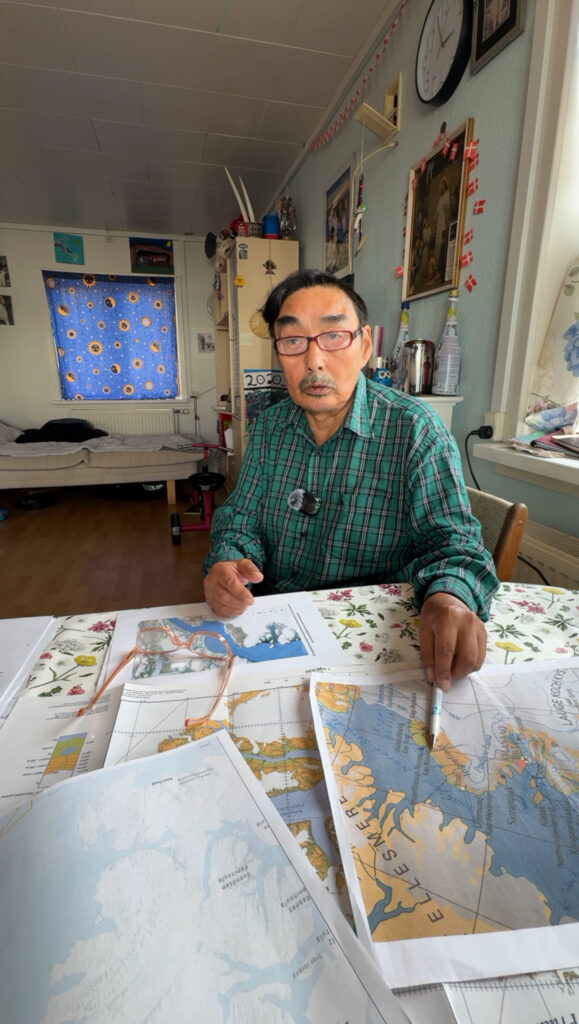
Nukagpiannguaq Hendriksen, from Siorapaluk, elder, highly respected and with more than 50 years of hunting experience. Photo: M. Lynge
Changing an entire way of life
One elder with more than 50 years of hunting experience described how the ice has changed not just in extent, but in structure and predictability. That distinction matters.
For someone travelling across the ice, a satellite image showing “ice” does not necessarily tell you whether that ice can carry a dogsled.
The consequences extend far beyond mobility. One hunter from Siorapaluk described a direct relationship between sea ice, dogsleds, hunting and fishing. As longer journeys on stable ice become more difficult, fewer dogs are needed and maintained. In his view, the chain is clear: changes in ice affect mobility, which affects dogs, which in turn affects hunting, food and an entire way of life.
When animals change their timing
The story is not simply one of animals disappearing.
Several people described more walrus than they remember from earlier decades. Some report more polar bears close to settlements and town.
Eider ducks and mussels appear more frequently in some places, while seals are harder to find or thinner than before. Narwhals still arrive in large numbers, but where and when they appear have changed.
A younger hunter told me that the shift in timing is perhaps the clearest sign of change. The ice freezes later. Walruses arrive at different times. Narwhals may pass places during periods previously not appearing.
Another hunter, who grew up in Siorapaluk, described an even broader geographical shift. While narwhals were once abundant close to the settlement, he now increasingly forced to travel farther south to hunt, sometimes towards Moriusaq and Narsaarsuk near Pituffik. Other hunters may travel north instead.
“We hunt farther south now,” he said.
A shared landscape across borders
Movements also bring the North Water Polynya between Greenland and Canada, or “Ikeq” as it is called by locals, into focus.
One elder described the areas on both sides of the water very simply: “It is shared land.”
For generations, people, animals and knowledge have moved across this region. Political borders do not necessarily reflect how the landscape has historically been used or understood.
The same is true ecologically. Narwhals, walruses, polar bears, currents and sea ice move across jurisdictions.
For the people who know this landscape through lived experience, Ikeq is therefore not only an ecological feature on a map. It is part of a connected geography of hunting, travel, family histories and relationships across the water.
Knowledge also lives inside the home
One of the most important lessons from the interviews was that Inuit Knowledge cannot be understood by speaking only with male full-time hunters. Women described environmental change through a different lens.
They notice what comes home from the hunt—and what no longer does. They remember when certain fish arrived, how much was caught, how skins changed, when food was prepared and how supplies lasted through winter. They also hold much of the knowledge around processing skins, sewing clothing, preparing food and maintaining a hunting household.
One woman described how the abundance of polar cod that once arrived in spring has declined dramatically. Fish that were once caught relatively high in the water must now be sought much deeper.
Her observations begin not necessarily on the hunting ground, but around the household. That is where ecological change becomes food, clothing, dog food, income and family life.
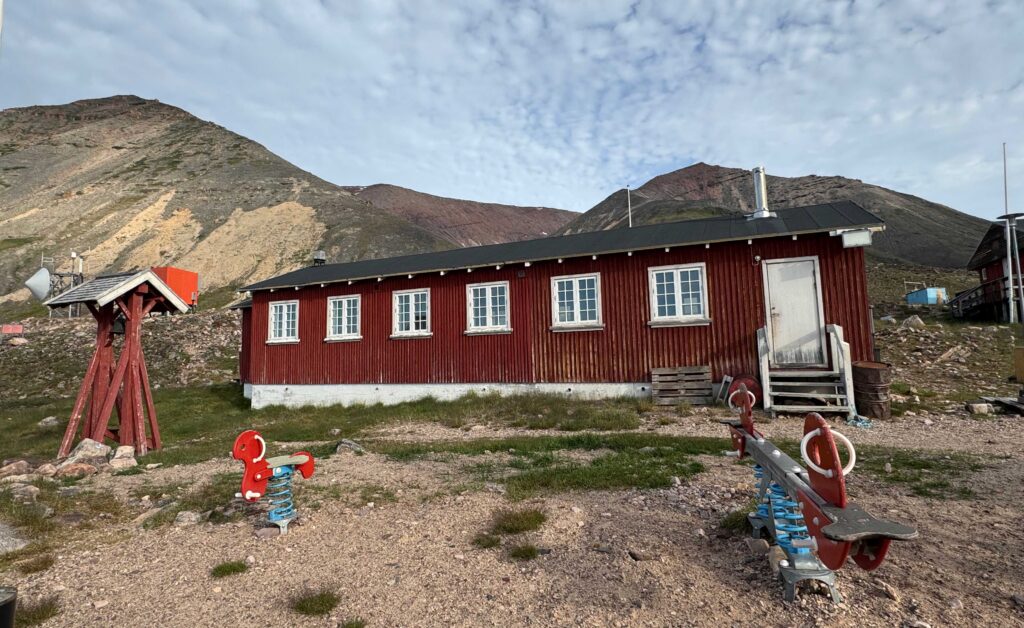
Siorapaluk’s church. In Greenlandic settlements, buildings often serve multiple purposes— school, church, community hall or daycare centre. Photo: M. Lynge
A culture under pressure—but not disappearing
Yet the people I met did not speak as though hunting culture belonged to the past, quite the opposite.
One part-time hunter, who is trained as an electrician and works with heavy machinery, sometimes goes seal hunting after work. That is why she keeps dogs. From the hunt she processes skins and fills her freezer with the meat.
She describes education as essential in a changing society, but sees no contradiction between formal education, wage employment and hunting. Her life combines all three.
This is one of the clearest examples of resilience I encountered during my trip to Qaanaaq. The future of Inuit hunting culture depends on the ability to find new ways of carrying its knowledge forward.
This means dogsleds alongside snowmobiles. Wage employment alongside hunting. Scientific research alongside generations of local observation. Modern education alongside skills learned from parents and grandparents.

Malene Lynge, former head of WWF’s Greenland programme.
Listening before deciding
People in Qaanaaq are not passive observers of climate change. They are adjusting every season. They decide whether the ice can carry them. They notice where currents have moved.
They change hunting routes. They watch animals arriving at unfamiliar times. They combine new technology with old techniques. And they continue teaching what they can to their children and grandchildren.
What struck me the most after weeks of conversations was not just the scale of the changes people described but their ability to observe and adapt to these changes.
For generations, survival here has depended on noticing change. Perhaps resilience begins there. Not with resisting a changing Arctic, but with retaining the knowledge, relationships and freedom needed to respond to it.
As the Arctic changes faster than ever, science can tell us a great deal about what is happening.
But the people who live on the ice, travel across it, hunt from it and raise their families beside it can tell us something equally important: what those changes mean.
By WWF Global Arctic Programme


By Malene Lynge
Head of WWF’s Greenland programme