
Illustration source: Vincent WF, Girard C, Rapp JZ, Tesar C, Provencher J, Ardyna M, Lancaster ML and Laforest BJ (2026) Why Is “The Place Where the Ice Never Melts” So Important?. Front. Young Minds. 14:1792274. doi: 10.3389/frym.2026.1792274
News
Explaining the Last Ice Area to school children
- Last Ice Area
A new scientific article offers insights into the importance and uniqueness of the Last Ice Area. But the publication comes with a twist: it is peer-reviewed by school children. Lead author Warwick F. Vincent shares his thoughts on the experience.
Frontiers for Young Minds is an open‑access scientific journal for kids. It aims to engage and develop the scientists of the future. To do this, school children between 8–15 are asked to review all the articles before they are published.
In November 2026, professors Warwick F. Vincent and Catherine Girard from Laval University in Canada with colleagues published an article on the Last Ice Area (LIA).
LIA is an area in the high Arctic of Canada and Greenland projected to be the last stronghold of summer sea ice as the Earth continues to warm due to climate change.
Sharing a passion
Doing research and field work is often more than just a job. This is why Vincent took the opportunity to share their passion for this remote part of the world.
“The LIA is a crown jewel of the Arctic that needs our urgent immediate protection, as well as long term protection by reducing global greenhouse gas emissions,” he says.

Warwick F. Vincent
Don’t be boring!
Communicating science to school children is one thing, being peer-reviewed by them is another. What could they do to appeal to this younger audience?
Their goal was simple: avoid sounding like boring scientists!
As scientists we have published hundreds of articles on the polar regions where we are very familiar with how fellow researchers will expect the new knowledge to be presented. However, we knew from all our previous outreach work with schoolchildren and the public that this approach would not work at all.
Warwick F. Vincent, lead author, Laval University
The extensive use of illustrations and photos helped explain the research and demonstrate the stunning beauty of the landscapes, lakes and sea ice in and around LIA.
“One of our favourites photos in the article is the one with huge Arctic hares. The area is so cold and the summer is so short in the far North that they do not have time to change their coats from bright white to brown. They stand stock-still when they see you, and maybe that helps them stay hidden on snowfields, but they really stand out on the brown polar desert when the snow melts.”
Connections to Inuit culture
The two reviewers, Caleb (13 years) and Tomas (12), expressed great interest in the work. Both wanted to know more about some of the observations, sending Vincent and his colleagues back to the library for further sources.
Caleb and Tomas also pushed for more details on LIA’s significance to the local Inuit culture.
Vincent and his colleagues tracked down a video interview with an Inuit family in Resolute Bay, who were involved in creating the LIA marine protected area “Tuvaijuittuq”, meaning “the place where the sea ice never melts”.
One of the statements made by the father is “We should always protect it and save it for our kids”. The young reviewers were happy with this video example, which also inspired the cartoon header for the published article, of a father and son, together appreciating the beauty and wildlife of this precious High Arctic refuge.
Really impressed
“Working with these young reviewers has been a lot of fun and we were really impressed by their ability to understand the importance of the LIA region as a unique Arctic wildlife refuge, the cultural importance of ice to the Inuit, and the urgent need to address climate change,” Vincent concludes.
Among the co-authors were Melanie Lancaster from WWF’s Global Arctic Programme and Brandon Laforest from WWF Canada.
Lancaster adds: “Caleb and Thomas represent the next generation of conservationists, scientists, and decision-makers. Getting their perspectives was really insightful and left me feeling inspired that they immediately “got it” – the importance of this place, its nature and its people.”
Read the publication here: “Why is “The place where the ice never melts” so important?”
Want to learn more about the Last Ice Area?
LIA is one of WWF Global Arctic Programme’s priority areas. Click here to read more about what LIA is, why it is so important and how it can be saved.
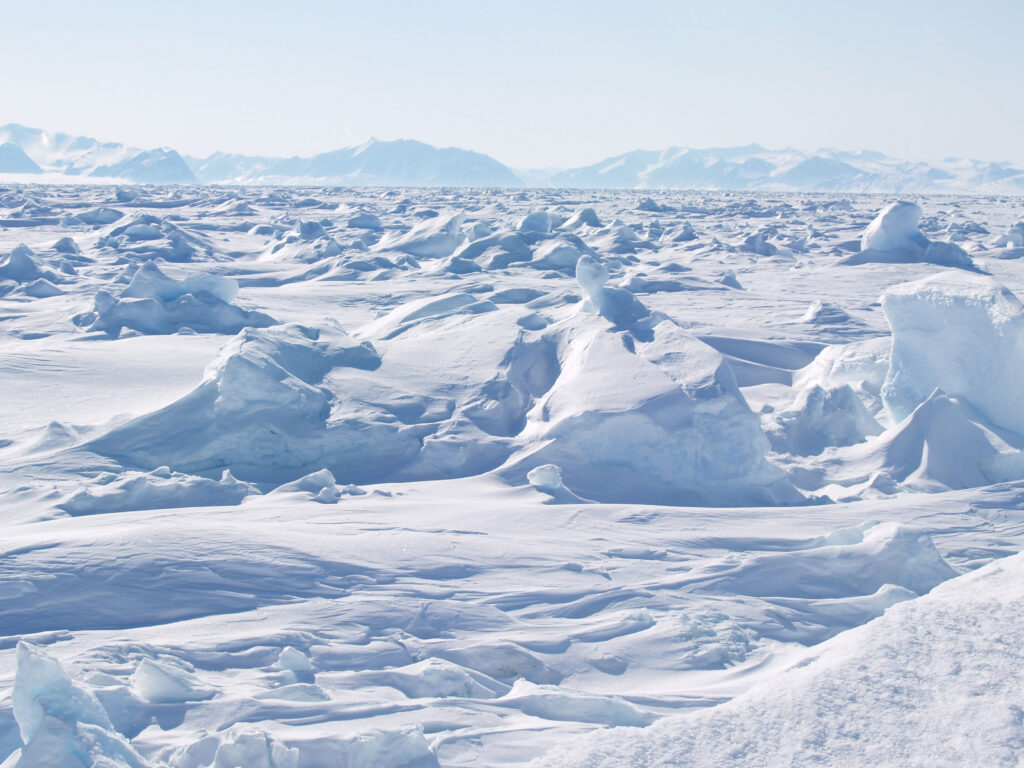
The rugged icescape along the northern coast of Canada. Photo credit: Warwick F. Vincent
By WWF Global Arctic Programme


