
© Public domain, via Flickr.com
News
Six ways a temperature overshoot will affect the Arctic
- Climate Change
A new report warns that global warming’s effect on the Earth’s frozen components will have a direct impact on hundreds of millions of people. Elena Tracy, Senior advisor on sustainable development, elaborates on the risks for the Arctic and what actions that are needed.
Earlier in November 2026, the Overshoot and the Cryosphere report was published. Written by the International Cryosphere Climate Initiative together with the UN Environment Programme, it states that permanently exceeding the 1.5°C limit will bring global and often irreversible damages to the cryosphere and polar oceans.
“This report offers a clear and comprehensible overview of the state of the Earth’s cryosphere. We are exceeding the 1.5 temperature limit and it will have dire consequences not just for the Arctic and Antarctica, but for the planet as a whole,” says Elena Tracy.

Iceberg, near Tasiilaq, Greenland Sea.
What is the Cryosphere?
The cryosphere are the components of Earth that are frozen. These include snow, glaciers, ice sheets, ice shelves, icebergs, sea ice, lake ice, river ice, permafrost and seasonally frozen ground.
The cryosphere and polar oceans provide essential and economically valuable resources to billions of people through provision of drinking water, agricultural irrigation, power generation, transport routes over sea ice and by supporting diverse ecosystems.
Snow, glaciers, sea ice, ice sheets, permafrost and the polar oceans help maintain a safe and liveable climate on Earth by regulating ocean and atmospheric temperatures, including ocean circulation and regional weather patterns.
Source:
International Cryosphere Climate Initiative (2026). Overshoot and the Cryosphere: Averting Global Meltdown. The Implications of Temperature Overshoot, Peak and Decline for the Cryosphere [Kirkham, J. D., Pearson, P., Garbe, J., Hancock, S., and Imdieke, A. (eds.)]. Stockholm, Sweden. DOI: 10.5281/zenodo.23477467
Six risks
While the report focuses on the entire cryosphere, there are several risks that are specific to Arctic. Wildlife and ecosystems, as well as the livelihoods, health and cultural identities of Indigenous and local communities will be affected in different ways.
Below are six ways the climate crisis is threatening the Arctic:
- Reduced sea ice: the Arctic summer sea ice is shrinking by almost 13% per decade and the sea ice cover continues to be younger and thinner. These changes are putting ice-dependent animals such as narwhals, polar bears and walrus at risk. This will in turn undermine the survival of Arctic species and the livelihoods of Indigenous communities.
- No longer a global air conditioner: a rapidly diminishing Arctic sea ice is accelerating warming for the entire Earth. Less sea ice means more open ocean, more heat absorption and more climate change.
- Rising sea levels: The Greenland Ice Sheet is the world’s second-largest repository of freshwater. As it melts into the ocean and raises sea levels, the effects will be significant. Under a business-as-usual scenario, Greenland alone could lead to a sea level rise of as much as 33 centimetres this century alone. By 2200, it could be a metre or more.
- Surging wildfires lead to a negative feedback loop: wildfires release greenhouse gases which in turn threaten valuable habitats for species like the caribou . Declines in various species threaten food security, infrastructure, health and cultural identities for people living in the Arctic.
- Thawing permafrost: By 2050, up to half of the Arctic infrastructure could face damage due to permafrost deterioration. Permafrost serves as a crucial carbon reservoir, stabilizing terrain, averting erosion, and supporting infrastructure. It is vital for Arctic wildlife like migrating reindeers as it prevents them from sinking in wetlands. Thawing and degradation also pose risks to structures such as buildings, pipelines, and airstrips.
- Eroding coastlines: Up to five metres of coastline are disappearing every year in some areas of Alaska. With little or no sea ice to buffer shorelines, storm surges are extending their reach several kilometres inland, flooding communities, killing wetlands and accelerating the thawing of permafrost. Along with damage to property, this is causing the irreversible loss of livelihoods and cultural heritage.

Elena Tracy, Senior advisor on sustainable development
Immediate measures are available
Even if the world is heading for an overshoot of the 1.5°C Paris limit, the goal should be abandoned. Quite the contrary, argues Elena Tracy.
“This makes the Paris goals even more urgent. Returning to 1.5°C or below by 2100 remains possible with sufficient political ambition and urgency. We need to speed the transition away from fossil fuel use to reach net zero by mid-century. This can prevent and even reverse some cryosphere loss and its global impact.”
January 2027 a crucial first step
In the short term, there some specific measures that should be take for the Arctic. These efforts include deep reductions in the emissions of short-lived climate forcers including methane and black carbon.
Both have a disproportionate impact on the Arctic.
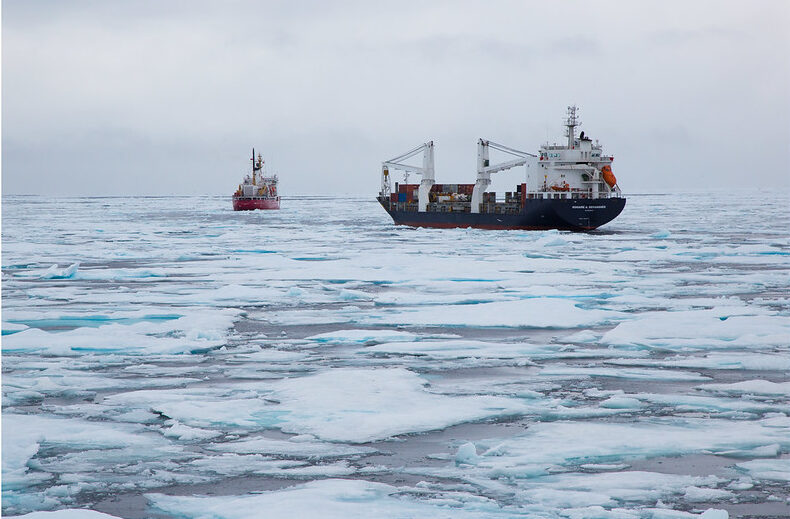
All economic and industrial sectors operating in the Arctic must reduce their emissions. For the shipping sector, this means rapid reduction in black carbon emissions via the adoption of cleaner fuels and decarbonization.
Elena Tracy, Senior advisor on sustainable development
A crucial first step will be in January 2027 when the International Maritime Organization will consider a proposal on the adoption of polar fuel regulation in the Arctic. This regulation will help reduce climate-heating black carbon emissions in the region.
“It is essential that Arctic countries such Canada, Finland, Iceland, Norway, Sweden and the US support this proposal,” says Elena Tracy.
© Martha de Jong-Lantink / Flickr
Threats to the Arctic
We are watching developments in five areas that could endanger Arctic environments and ways of life. Learn more about them here:
By WWF Global Arctic Programme


