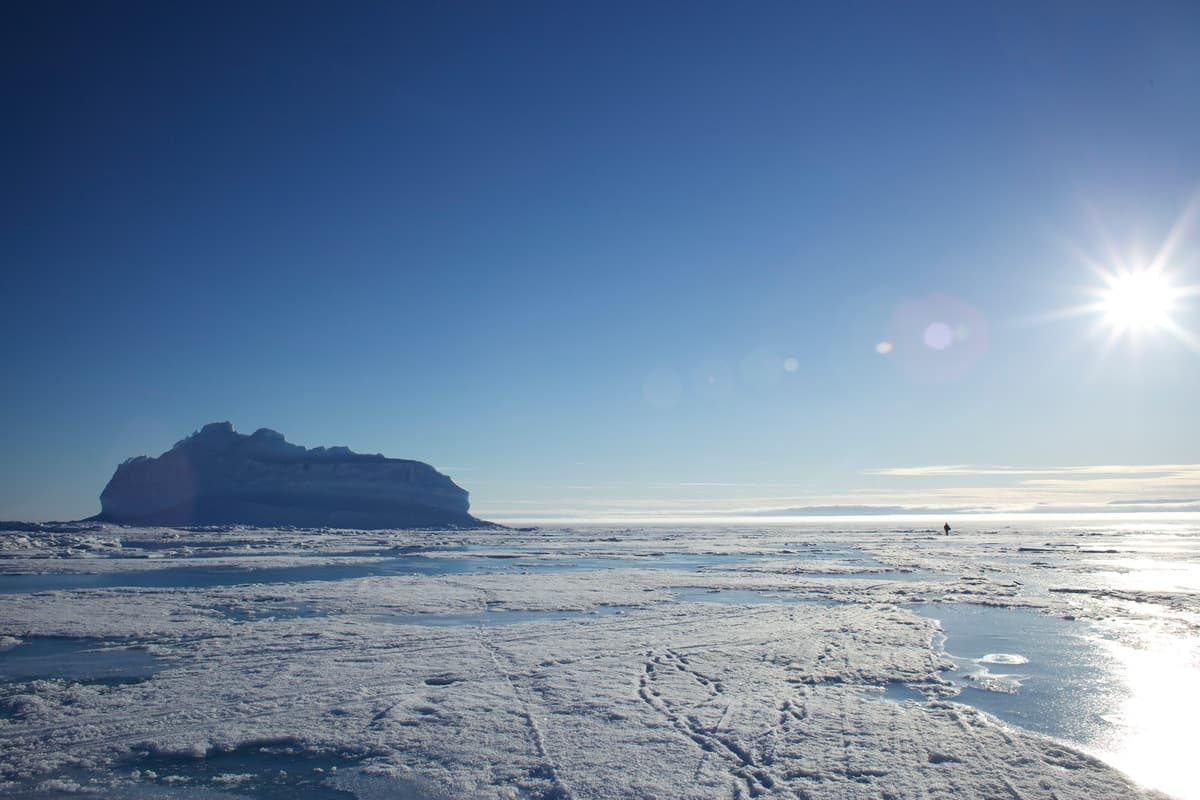
Ellesmere Island, part of the vast marine and coastal Environment of Nunavut’s Qikiqtani region. Photo credit: Jean-Daniel Champagnac (distributed via imaggeo.egu.eu). CC BY-NC-SA 3.0
SINAA
Where partnership meets permanence
SINAA, which means “floe edge” in Inuktitut—the edge where sea ice meets open water—represents the power of partnerships to protect Arctic ecosystems, including parts of the Last Ice Area, while strengthening the Qikiqtani Region’s conservation economy. As ANGELA STADEL writes, through Inuit leadership and collaboration, SINAA is shaping the future of marine conservation and contributing significantly to Canada’s goal of “30 × 30”: preserving up to 30 per cent of its oceans by 2030.
Surrounded by the vivid fall colours of the tundra, we gathered in Iqaluit, Canada, in September 2023 with teams from the Qikiqtani Inuit Association (QIA) and The Pew Charitable Trusts to begin shaping what would become the SINAA Agreement.
A profound learning journey
Looking back today, I find myself reflecting on what it took to reach this remarkable milestone—an agreement that will guide the establishment and management of marine protected and conserved areas and support Inuit governance, stewardship and employment for years to come.
For me and my Government of Canada colleagues, it was a profound learning journey. The Project Finance for Permanence (PFP) initiative was new to all of us. Bringing it to life required us to develop a deep understanding of the Qikiqtani Inuit vision, the priorities of the philanthropic donors led by The Pew Charitable Trusts, and the Canadian government’s commitments to conservation and reconciliation.
Over 18 months of difficult conversations, shared laughter and steady progress, we reached the SINAA Agreement in February 2025.
A new model for conservation
Every PFP initiative begins with a shared vision for lasting conservation. For SINAA, that vision came from the QIA, whose leaders recognized that the long-term health of the Arctic’s marine and coastal environment is inseparable from Inuit language, culture, governance, livelihoods and economy.
When SINAA negotiations began, the Government of Canada and QIA already had a strong foundation of collaboration, having established the Tallurutiup Imanga National Marine Conservation Area and the Tuvaijuittuq Marine Protected Area in 2019.
Together, these areas cover more than 420,000 square kilometres, representing nearly a quarter of the progress needed for Canada to protect 30 per cent of its oceans by 2030.
Building on that foundation, the PFP initiative launched in 2022 created an opportunity to take a region-wide approach to conservation while securing long-term support for Inuit-led stewardship and governance.
The result was SINAA.
Not just funding and planning
SINAA combines all the key elements needed to make conservation last: a plan to establish new protected and conserved areas, long-term financing, a regional Inuit stewardship council to guide implementation, expansion of the Nauttiqsuqtiit Inuit stewards (local environmental guardians in Nunavut), and the construction of new community conservation centres.
The Aajuraq Conservation Trust Society was established to support this work over the long term and will manage the investments of $200 million from the Government of Canada and $70 million from philanthropists.
Building SINAA required more than funding and planning. It required partners to learn from one another and work through difficult issues together. The negotiations reinforced the importance of understanding the history of government decisions and their lasting impacts on Inuit.
As part of the process, the federal government and philanthropic teams read the report and recommendations of the Qikiqtani Truth Commission and worked with QIA to build these into SINAA and our way of working together.
We also learned the importance of maintaining momentum. When any part of the agreement required more time, partners continued to work on other elements. We built mutual understanding to get through the challenges. Dedicated teams, supported by specialized expertise where needed, also helped move the work forward.
The Pew Charitable Trusts contributed experience from other PFPs around the world. We also benefited from the experiences of the Great Bear Rainforest agreement and the Great Bear Sea PFP, which concluded in 2024.
SINAA: Key milestones
• 2019: Canada and the Qikiqtani Inuit Association establish the Tallurutiup Imanga National Marine Conservation Area and the Tuvaijuittuq Marine Protected Area, laying the foundation for future collaboration.
• 2022: Canada launches the Project Finance for Permanence initiative, creating an opportunity for a region-wide approach to marine conservation and long-term financing.
• September 2023: Representatives of the Qikiqtani Inuit Association, the Canadian government and philanthropic partners start negotiating the SINAA agreement.
• February 2025: The partners sign the SINAA agreement, securing long-term funding and governance for Inuit-led marine conservation across the Qikiqtani region.
• November 2025: SINAA implementation launches, with a celebration in Iqaluit.
• March 2026: The Qikiqtait and Sarvarjuaq Marine Protected Areas are established, marking the first major conservation outcomes under SINAA.
• Beyond 2026: SINAA will continue to support Inuit stewardship, conservation centres, research and the establishment of additional protected and conserved areas.

This map shows existing and proposed protected and conserved areas across the Qikiqtani region. SINAA builds on this conservation network to support the establishment and long-term stewardship of marine protected and conserved areas.
A lasting legacy
Less than a year after SINAA launched, we are already seeing its impacts.
In March 2026, the Qikiqtait and Sarvarjuaq Marine Protected Areas were established.
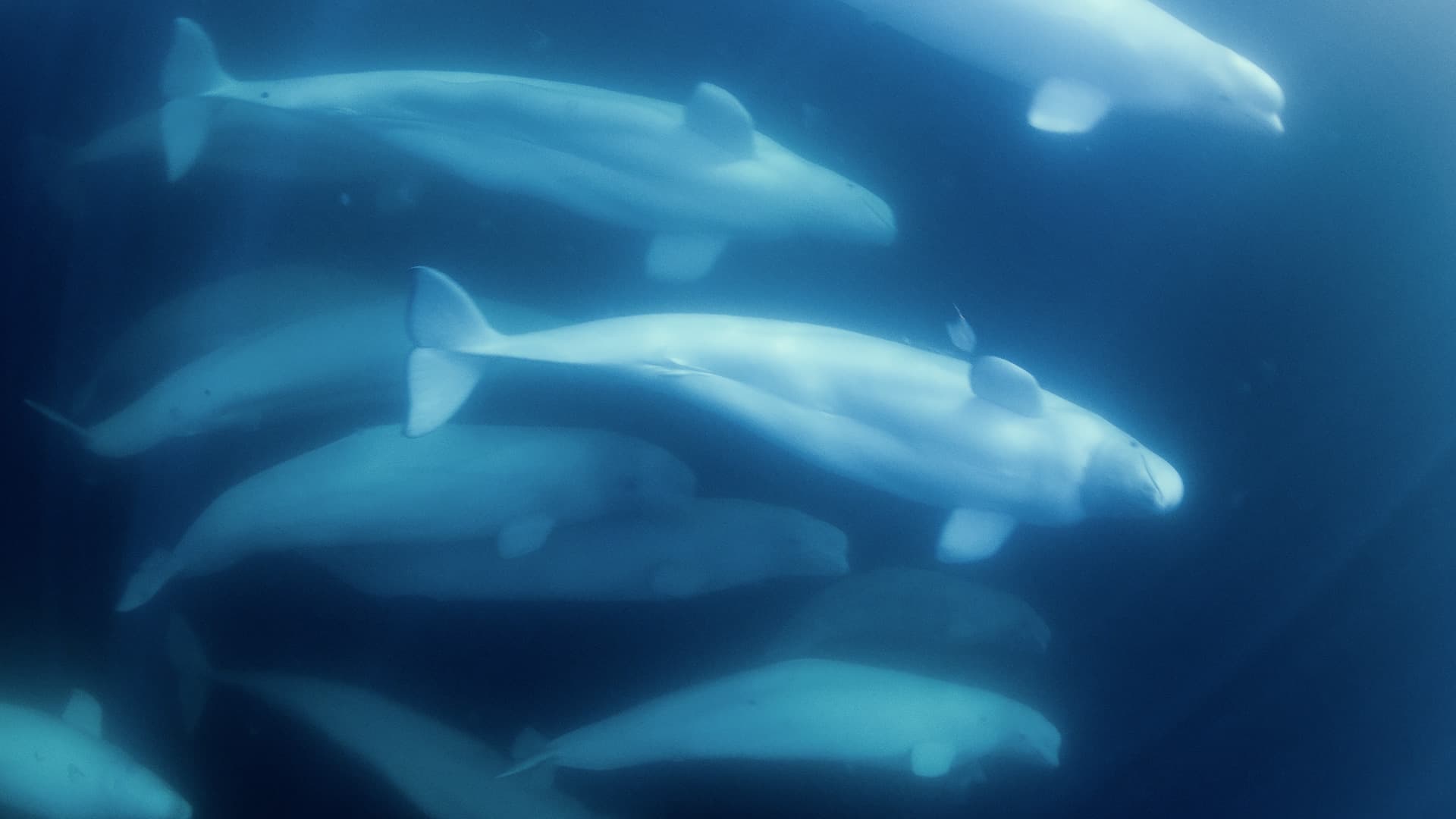
Qikiqtait protects recurring polynyas—areas of open water surrounded by sea ice—that provide key habitat for polar bears, seabirds, seals, belugas, Atlantic walrus and Arctic char while supporting food security for the Inuit of Sanikiluaq.
The QIA also designated the Qikiqtait Nunangit Inuit Protected and Conserved Area on the Belcher Islands. Farther north, the Sarvarjuaq Marine Protected Area protects parts of Pikialasorsuaq (the North Water Polynya), a globally significant marine ecosystem shared with Greenland.
These areas contribute an additional two percentage points to Canada’s marine conservation targets. The Nauttiqsuqtiit programmes will create employment opportunities across the Qikiqtani region and strengthen stewardship, research, monitoring and Qaujimajatuqangit (Inuit Knowledge).
Conservation succeeds when Indigenous leadership, governments and philanthropic organizations commit for the long term. Like the floe edge itself, the future of conservation lies in the dynamic space where partnership, innovation and vision come together.
I look forward to watching SINAA’s story unfold for decades to come.

A bearded seal. The Qikiqtait Marine Protected Area provides important habitat for seals, polar bears, seabirds and belugas. Photo credit: Mark Goldner (PolarTREC 2011), Courtesy of ARCUS
Note: Information, findings, and viewpoints presented in articles authored by external contributors are their own and do not necessarily represent WWF positions, policies, or interpretations. For general inquiries, please email info@arcticwwf.org.


By Angela Stadel
Angela Stadel was the federal lead negotiator for the SINAA and Great Bear Sea Project Finance for Permanence initiatives.